
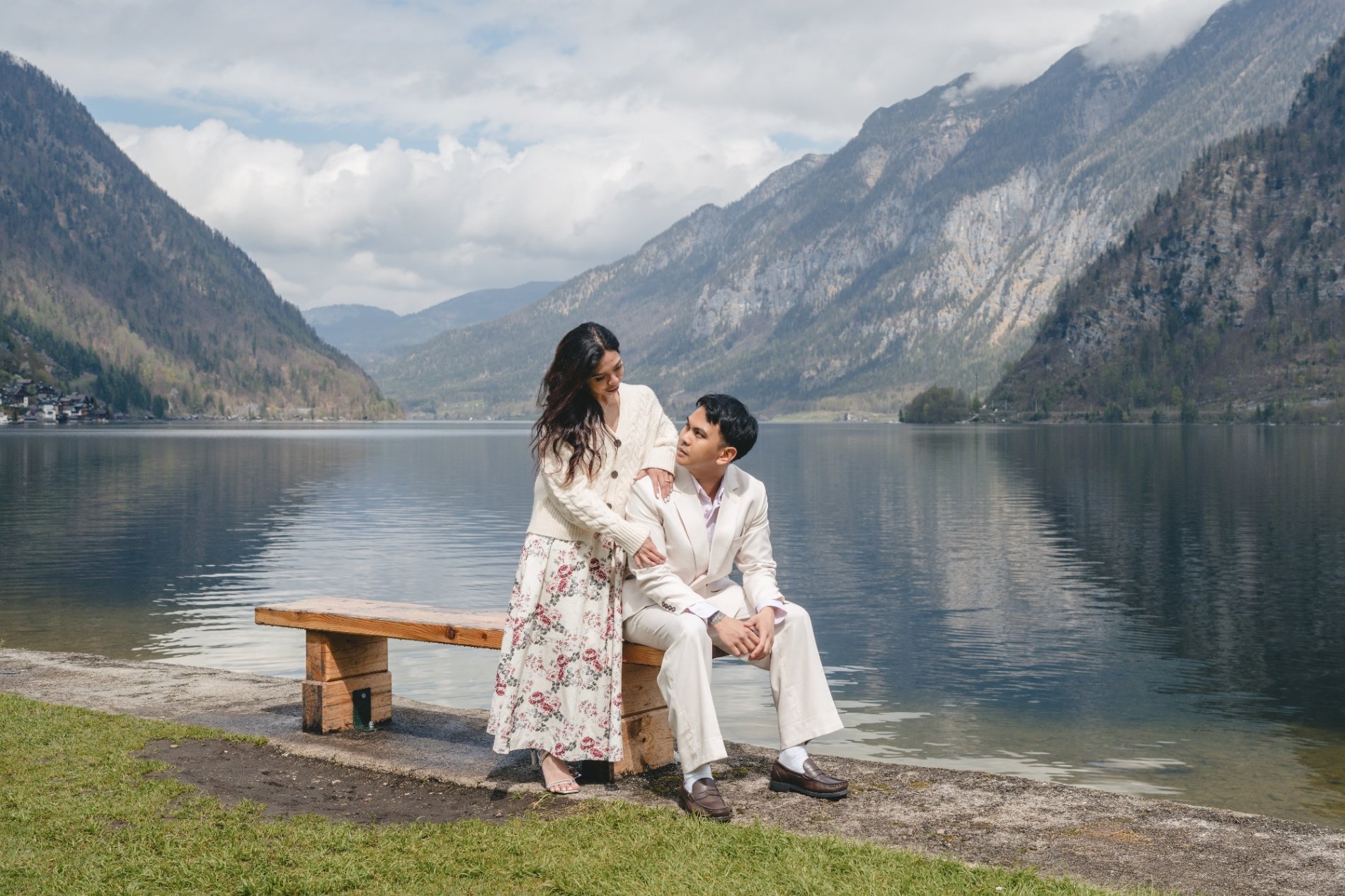
Hallstatt Photoshoot Guide: the classic viewpoint and how to beat the crowds
Hallstatt is one street deep and a mountain high, and photographing it is a timing problem rather than a location problem. There is really only one frame that made the village famous, it is a few metres wide, and between ten in the morning and four in the afternoon there is a queue for it. Arrive at first light and you have the same picture without two hundred people in it. Everything else — the square, the boathouses, the platform above the roofs — is a bonus that fills the hours around that one decision.
4 photo spots in Hallstatt — click a pin to open the full guide
The classic viewpoint on Gosaumühlstraße
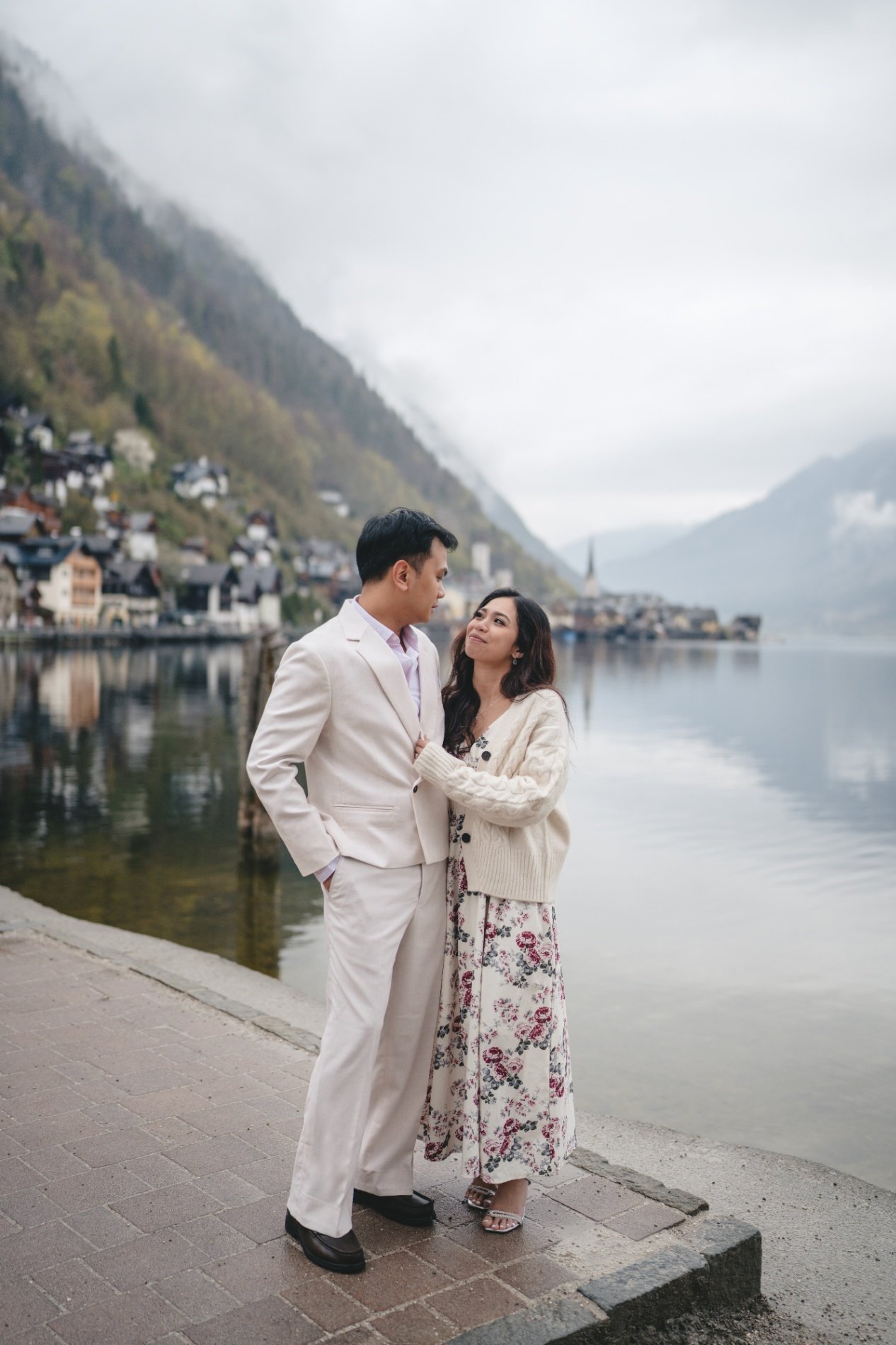
Gosaumühlstraße is the lake road running north out of the village. About four hundred metres past the last houses the pavement widens and the whole postcard arrives at once: Hallstatt pressed between the water and the wooded Salzberg, pastel houses stepping up the slope, the pointed spire of the Protestant church standing on the shore, and the Dachstein closing the valley behind. Three or four metres of railing carry the entire frame. Step ten metres either way and a tree takes the spire.
The village faces east across the lake and the Sarstein ridge on the far shore holds the sun back until mid-morning, so the first hour after dawn is soft, shadowless and often misty over the water. No direct light at all — and that is the version of this place that works. By nine the houses take the sun, by ten the coaches have arrived, and the railing stays three deep in phones until about four. Late in the day the sun drops behind the Plassen and the village front goes flat and blue.
It is a fifteen-minute walk from the Marktplatz, level the whole way, on a narrow public road with no pavement in places and buses and delivery vans using it all day. Stay inside the railing and keep the group tight rather than spread across the carriageway. Hallstatt has its own rules on drones over the village and on where groups may stand, and they change — check before the day. More on the classic viewpoint on Gosaumühlstraße.
The Marktplatz, and where to go at noon
The Marktplatz is tiny — a cobbled square barely thirty paces across, ringed by narrow-fronted merchant houses in ochre, cream, pink and green, most of them rebuilt after the fire of 1750, with the Holy Trinity column in the middle and flower boxes from spring to October.
Because the Salzberg rises immediately behind it, the square sits in soft shade for most of the day and never gets the hard contrast that ruins the lake views at noon. It is the sensible answer to the question every visitor asks too late: what do we shoot at noon? Early morning empties the square completely; the hour before dusk half-empties it and turns on the lanterns. The alleys running off it — up the steps towards the church, down to the water — give the same houses without the current of people. The café terraces are not public ground, so ask before working around the tables.
The pier, the boathouses and the boat from the station
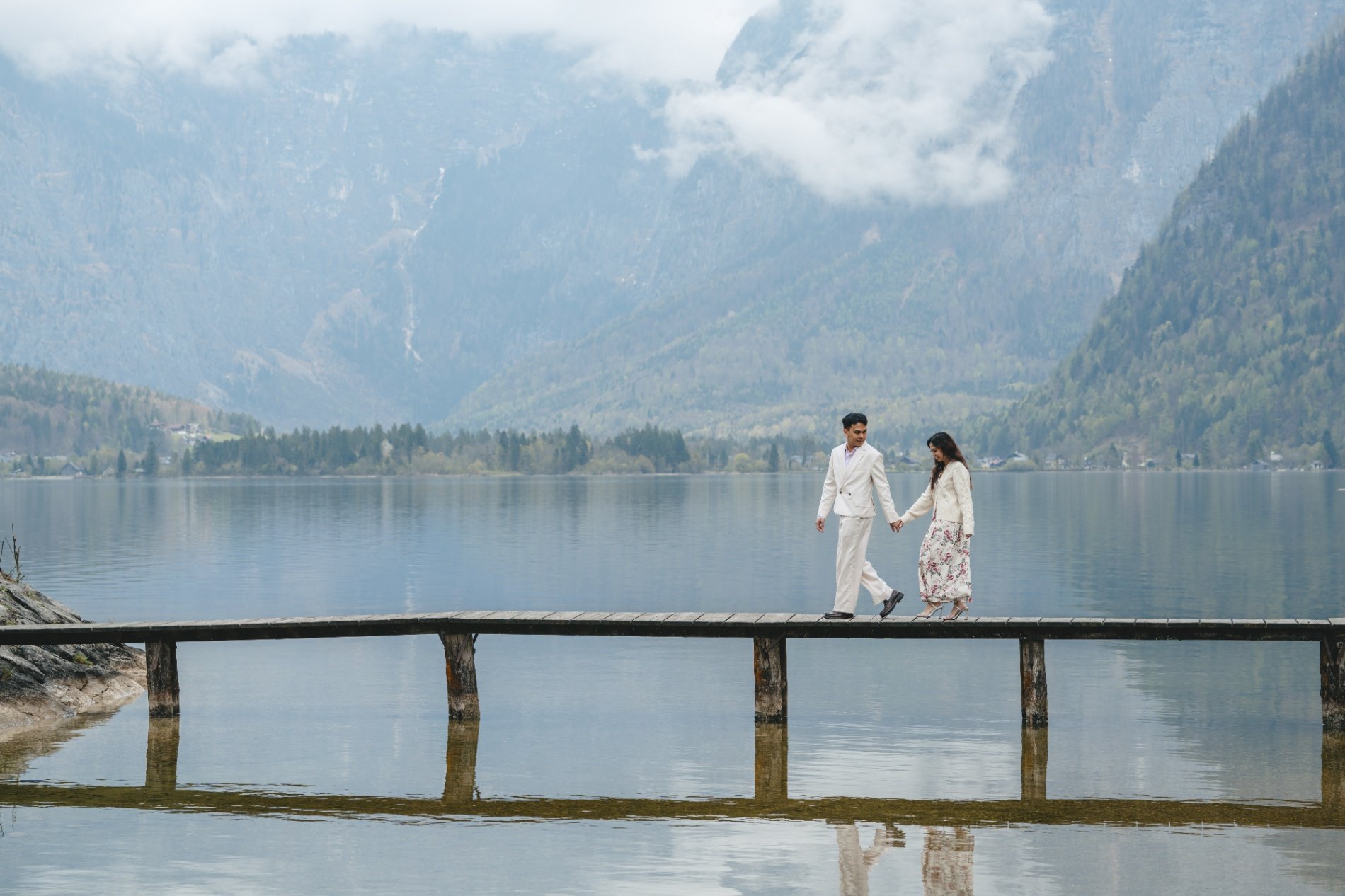
Hallstatt has no road bridge and no station on its own shore. The trains stop across the lake and a small ferry has met them since the nineteenth century, crossing in about ten minutes and tying up at the wooden landing by the Marktplatz. The pier itself is one of the best frames in the village: a few metres of planking pushing into the water, the village rising behind, the Dachstein filling the far end of the lake. On either side the old Seehütten stand on stilts over the shallows, dark timber against the pale render above.
The stretch of the Seestraße that links them is quiet at either end of the day and level all the way, which makes it the easiest spot in Hallstatt for anyone who does not want a climb. Dawn gives glass-flat water and mist; the hour before sunset lights the far shore while this side is already soft. The pier fills each time a boat lands and empties two minutes later, so time the frame between arrivals. Sailings are set by the season and by the trains — check them if you want a boat in the picture. More on the lake pier and the boathouses on the Seestraße.
Above the roofs: the skywalk and the new funicular
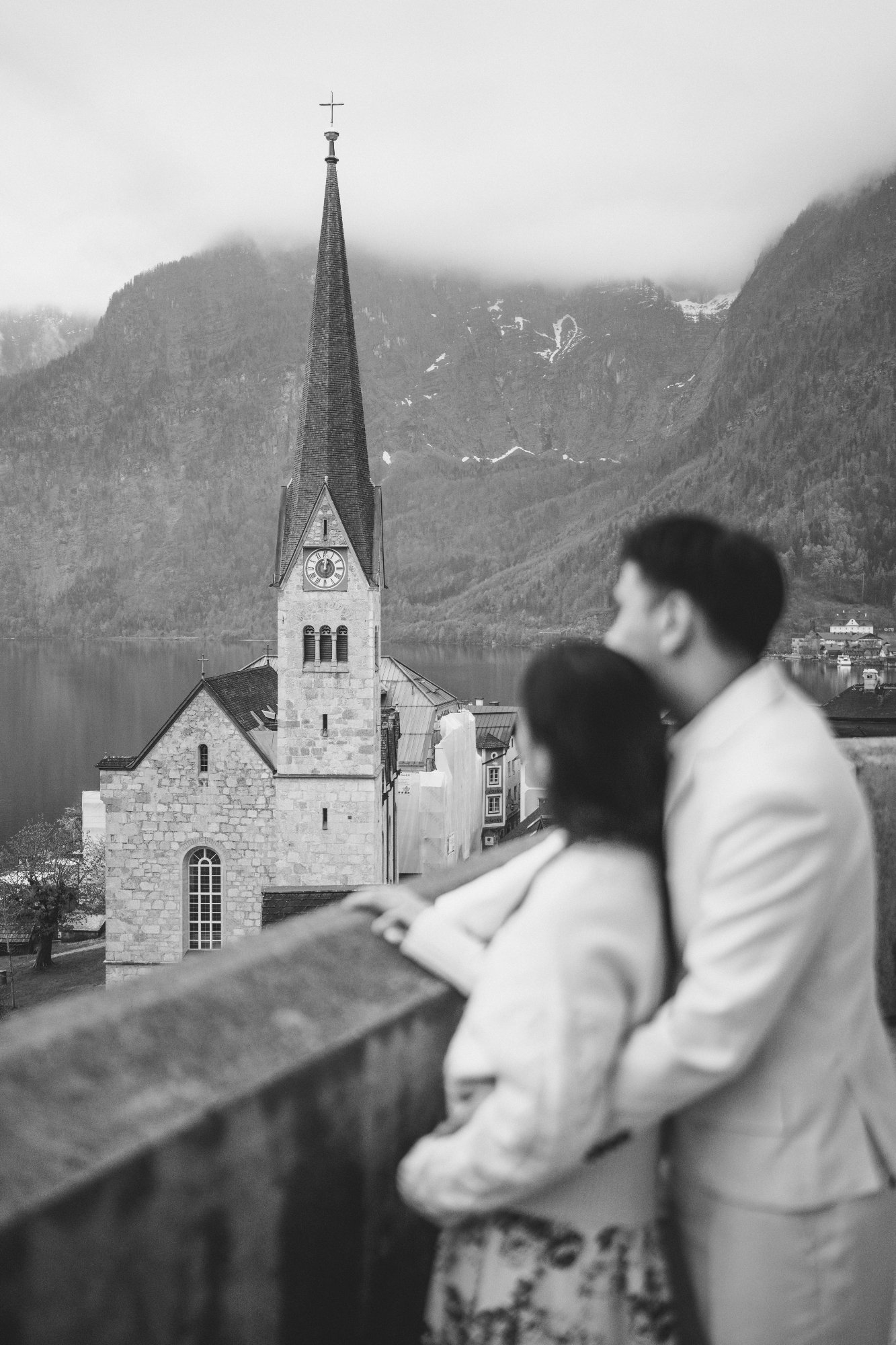
The Skywalk Welterbeblick juts out from the slope of the Salzberg beside the Rudolfsturm, a tower first built in 1284 to guard the salt workings. The platform hangs about 350 metres above the village, and from the rail Hallstatt lies below in plan — church, square, boat landings, the thin line of the lake road — with the lake running north between the ridges.
This is the part of Hallstatt that changed most recently. The funicular from Lahn, at the southern end of the village, was rebuilt over a year and returned to service at the end of August 2026, with the salt mine and the skywalk reopening with it; the new cars are step-free and carry far more people per trip. The ride takes about three minutes. On foot it is forty-five minutes to an hour of properly steep woodland. Opening seasons, first ascent and last descent all change through the year and the line closes for maintenance, so check the current timetable before you build a session around the ride.
The light up here is the opposite of the lake road: the platform faces roughly north-east over the village, so mornings are clean and the middle of the day is workable, while by late afternoon the valley below is already in shadow. Autumn and winter give the clearest air. It is exposed and several degrees colder than the village — bring the layer you would not need down below.
What clients say about this kind of shoot
We are overjoyed with the photos from our wedding. Ian and Kiran not only have a fantastic eye for the special moments, they also bring a wonderfully relaxed and caring manner. Our guests were thrilled too! Thank you so much for the priceless memories and for your amazing dedication. We couldn't have wished for a better photographer ♥️
— Behiye O. on Ian P.
We're so happy we chose you! From the very first contact, everything was totally hassle-free and pleasant. Both at the pre-wedding shoot and on the wedding day we felt really comfortable with you, and everything was really relaxed and professional. The photos turned out really great and we're absolutely thrilled with the result! You captured the most beautiful moments of our day perfectly and gave us truly lovely memories. Thank you so much for your amazing work! We'd book you again any time and can't recommend you enough! ❤️
— Chelsea B. on Ian P.
Very professional, likeable and easy to work with. The photos turned out beautifully and capture our wedding day in a very special way. We're very happy and can definitely recommend him!
— Tony P. on Ian P.
Super friendly, creative, dedicated photographers! We clicked right away, they were really accommodating and delivered on time! Absolutely amazing photos that we always love looking at 😍
— Rechusmile on Ian P.
Dreamy wedding photos and incredible speed! We couldn't have wished for a better photographer for our special day than Jessica! Even getting to know her in person before the wedding completely convinced us, and we weren't disappointed. She has a wonderful, pleasant manner, so we felt great in front of the camera from the first second. The pictures turned out simply beautiful and capture the emotions of the day perfectly. Another absolute highlight was the speed: we got our finished photos and the highlight video incredibly fast! Dear Jessica, a thousand thanks for these unforgettable memories. We recommend you with all our hearts!
— Bianca B. on Jessica L.
For our wedding, nothing mattered more to us than capturing the special moments and emotions forever. So naturally we had pretty high expectations of our photographers and videographers – and finding them was probably one of the biggest strokes of luck in our wedding. ❤️ On the day itself, we already felt incredibly comfortable with the two of them. They're super friendly, warm-hearted and at the same time absolutely professional. You can tell right away that they know 100% what they're doing, and they still manage to capture the moments completely naturally, without anything feeling posed. At first we even thought we didn't really need a video and were only looking for a photography team. Today we can say: we needed this video!!!🥹 The video truly exceeded our expectations. Watching it feels like living our wedding day all over again – with all the emotions, the voices and the little moments that we ourselves didn't even consciously take in on the day. And the photos turned out simply beautiful too, capturing our day exactly the way we want to remember it. We are incredibly grateful that the two of them were by our side at our wedding and captured these special memories for us. We would choose them again any time and recommend them with all our hearts. ❤️
— Marlene on Ian P.
Working around the day-trippers
The rhythm is predictable enough to plan against. Coaches begin arriving around ten and the village stays busy until about four, when the day-trip buses leave for Salzburg and the light comes back.
Cars are the other half of the problem. A barrier on the way in stops day visitors from driving into the centre during the day — roughly from eight in the morning until five in the evening, with hotel guests admitted — and everyone else parks in the numbered car parks and walks in, ten to forty minutes depending on which one. The rules and charges are the municipality's own and have been tightened more than once, so check before you drive. The alternative is genuinely better: take the train to Hallstatt station and cross on the ferry, which lands you two minutes from the square with the best view of the village on the way in.
The real trick, though, is to sleep there. Staying overnight buys you both ends of the day — the empty hour after dawn and the empty hour after the coaches leave — and turns Hallstatt from a queue into a village.
Hallstatt in winter
Winter is the quiet reward. Snow sits on the roofs and on the Dachstein, the coaches thin out sharply outside the Christmas and New Year holidays, and the lake almost never freezes, so the reflection stays. The blue hour arrives around half past four and the lit windows do the work the flower boxes do in summer. The lake road can be icy underfoot and the funicular runs a much shorter winter timetable. Bring proper shoes and plan sixty minutes rather than two hours; nobody looks relaxed at minus five for long.
Two valleys worth the extra half hour
If you have a second morning, spend it at the Gosausee, about half an hour away by road. The Vorderer Gosausee holds the Dachstein, its glacier and the grey teeth of the Gosaukamm upside down in the water, and the frame is a minute from the car park — but only early, because the valley wind gets up late in the morning and takes the reflection with it.
North along the lakes, St. Wolfgang gives a painted lakefront, a pilgrimage church and the Schafberg rack railway, which has run since 1893 and climbs to 1,732 metres in about 35 minutes; it operates roughly from May to late October, weather permitting, so check the season.
Planning a Hallstatt photoshoot
Plan one place at the right hour rather than three at the wrong one. In summer that means starting at or before sunrise on Gosaumühlstraße and moving down to the pier and the square while the village is still waking up. In winter it means the last two hours of the afternoon, finishing in the blue hour with the lights on.
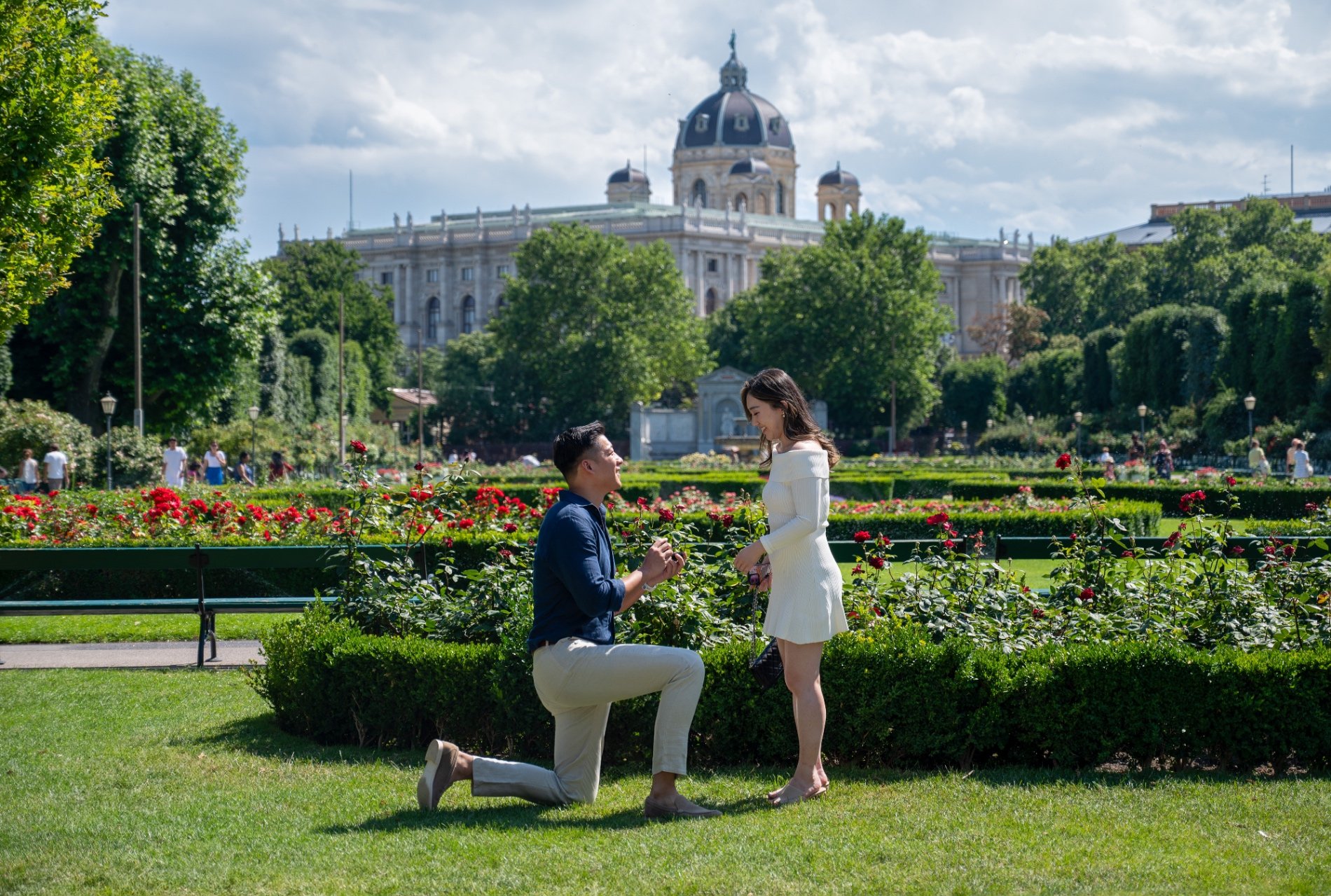
Sixty minutes covers the viewpoint and the lakefront comfortably. Two hours lets you add the square, the lanes and, if the timetable cooperates, the platform above the village. Anyone planning a proposal should decide in advance whether they want the classic frame — which means dawn — or privacy, which means the boathouses or the upper lanes.
A photographer who works Hallstatt regularly knows which morning the mist sits on the water and which minute the ferry lands. You can see the whole destination on the Hallstatt page and book a photographer online; express sessions start at €429 for 60 minutes, all-inclusive.
Want professional photos in Hallstatt?
Browse portfolios, compare packages, and book a verified local photographer in minutes.