Best Photo Spots in Vienna: Schönbrunn, Belvedere, the Ringstrasse and the quiet corners
Vienna photographs like a stage set, and the stage runs to a timetable. The great palace gardens are free and open before seven in the morning; by eleven the same gravel walk holds three coach parties. The monuments on the Ring stand five minutes apart on foot but face in four different directions, so the order you walk them in decides whether the light is with you or against you. Nothing here is hard to reach — almost every frame below is a few minutes from a U-Bahn station. The whole craft of shooting Vienna is knowing which hour belongs to which building.
4 photo spots in Vienna — click a pin to open the full guide
Real shots from Vienna
Schönbrunn: the first hour after the gates open
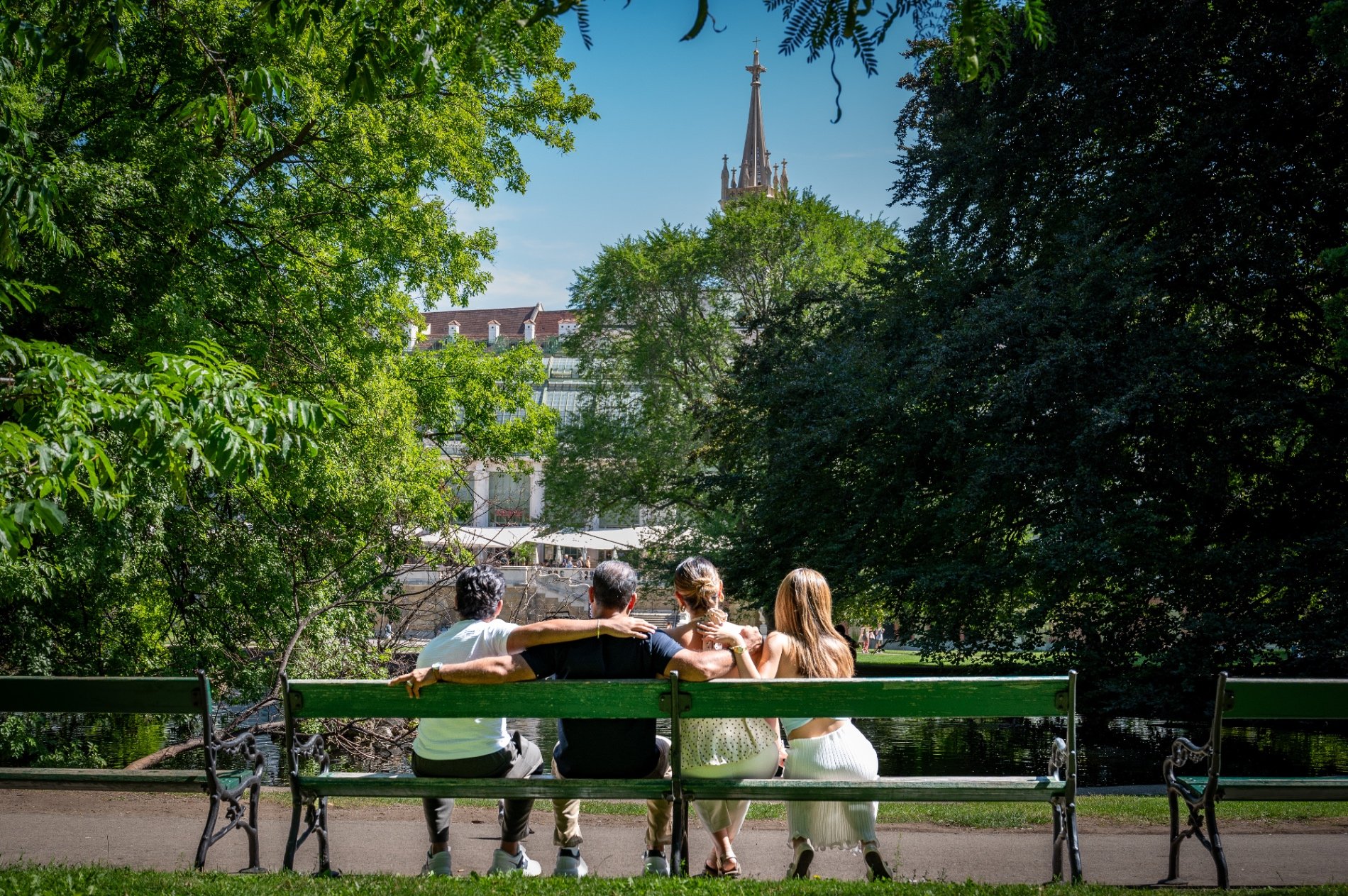
Schönbrunn's park opens at 6:30 in the morning, hours before the palace does, and that first hour is the entire point. The parterre runs from the palace's garden front to the Neptune fountain — a quarter of a mile of gravel, clipped hedges and flower beds, with the Gloriette on its hill closing the view. From the fountain the palace fills the frame; from the Gloriette's colonnade the parterre, the palace and the city behind it stack into three clean planes. At that hour the light comes low from the east and turns the Gloriette's stone honey-coloured. By nine the walks carry the first tour groups, by eleven there are a hundred people in the picture. Late afternoon is a second window, with the sun behind the Gloriette and the palace lit from the west, but it is never as empty.
Take the U4 to Schönbrunn for the main gate, or one stop on to Hietzing for the quieter Hietzinger Tor. The zigzag paths up to the Gloriette take about ten minutes and there is a step-free route on the eastern side. The park and the Gloriette hill cost nothing; the rooftop viewing platform, the palace rooms and the maze are ticketed, and the estate sets its own rules on tripods, drones and anything that looks like a production — those change, so check them before the day. More on the Gloriette terrace and the Schönbrunn parterre.
In winter the beds are bare and the fountains are off, and the geometry is stronger for it. Snow on the parterre is the rarest and best version of this picture — usually January, never promised. From early November the Christmas market fills the courtyard in front of the palace and runs into the first week of January.
The Belvedere: the palace that stands twice
On the south side of the Upper Belvedere, between the palace and the gate, a long pool doubles the whole façade on a still morning. That is the shot on the posters and it costs nothing. On the garden side the baroque parterre steps down through cascades and hedges towards the Lower Belvedere, with St Stephen's spire and the city behind it — the view Canaletto painted.
The gardens open early, around 6:30 in summer and later in winter, and are free; the museums inside both palaces are ticketed and open at ten. Before nine you share the paths with joggers. The reflection is only as good as the wind allows, so check the forecast the night before and go on the calm morning, not the pretty one. The south façade faces the sun and is lit from the front for most of the day; the north garden is in shade in the morning and warms up in the afternoon. Winter is the Belvedere's real season — snow turns the hedges into graphic black lines and January is the likeliest month for it. Tram D stops at the upper gate. More on the Belvedere reflecting pool.
The Ring, the Hofburg and Michaelerplatz
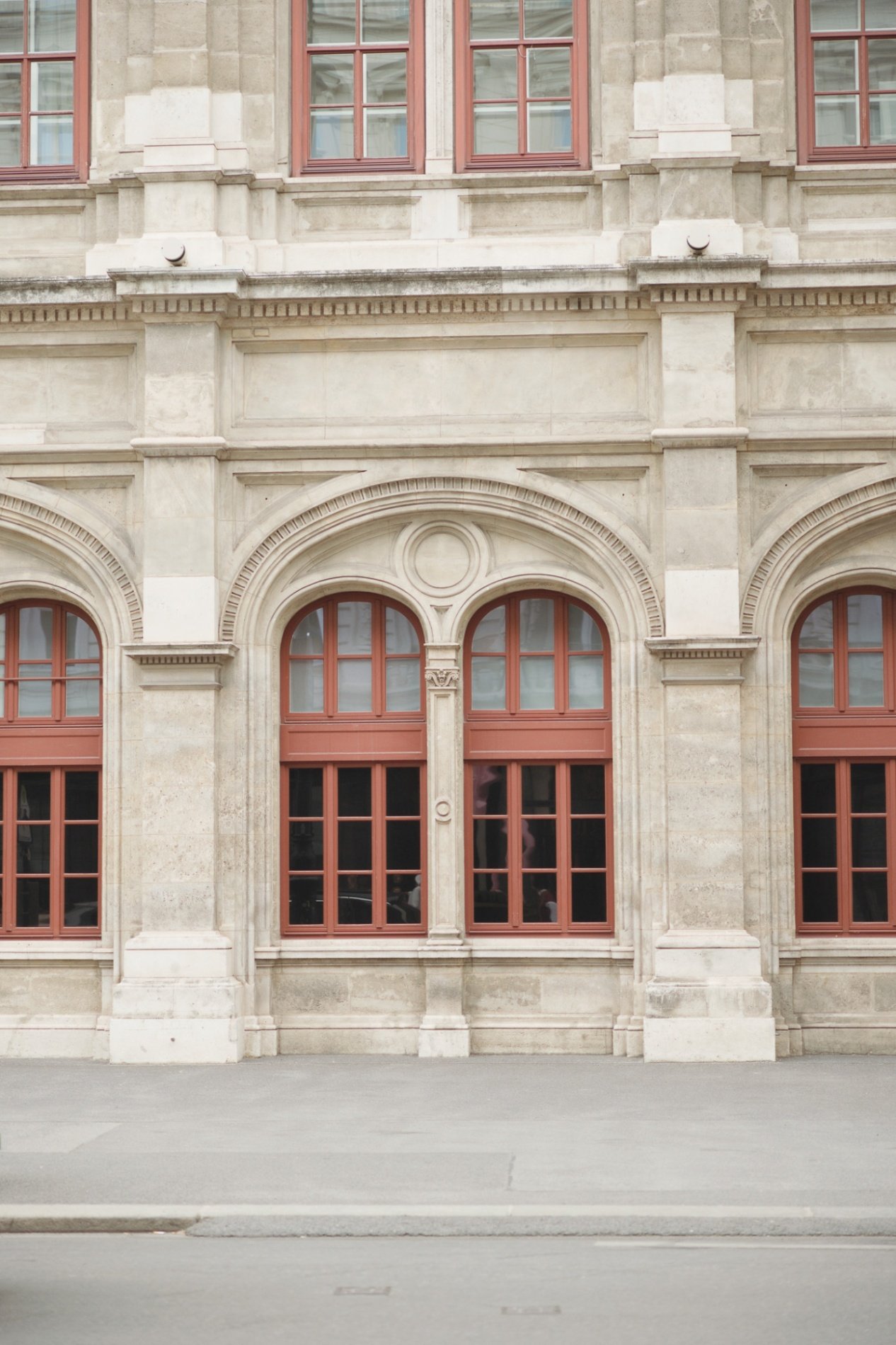
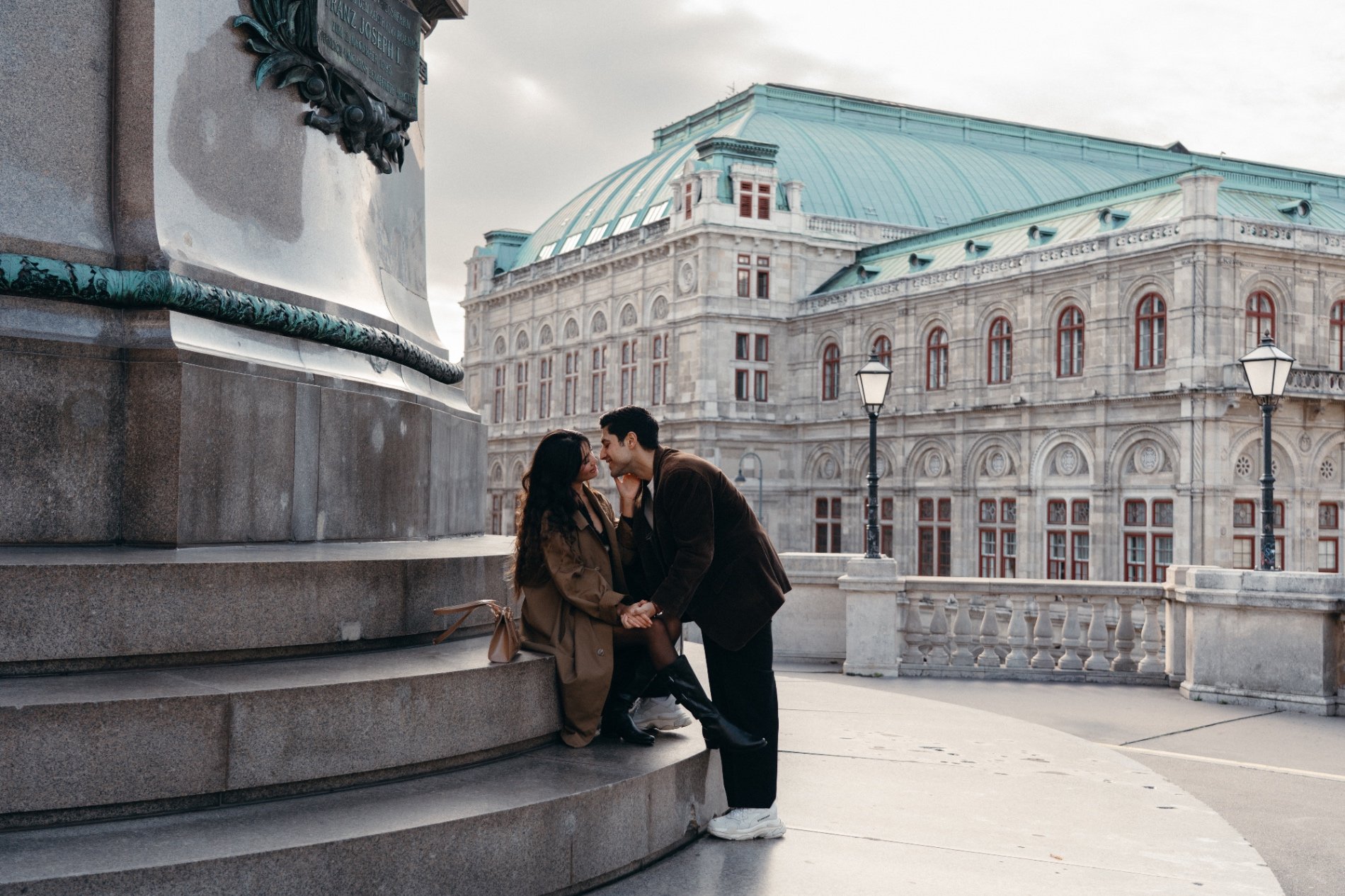
The Ringstrasse is a working boulevard, not a monument: trams every couple of minutes, cyclists, taxis, delivery vans. Put the buildings behind you instead and let the red-and-white trams supply the movement. The neo-Gothic Rathaus, the Burgtheater opposite it and the Opera all give formal backdrops within a short walk, and Heldenplatz behind the Hofburg is big enough to be empty at eight.
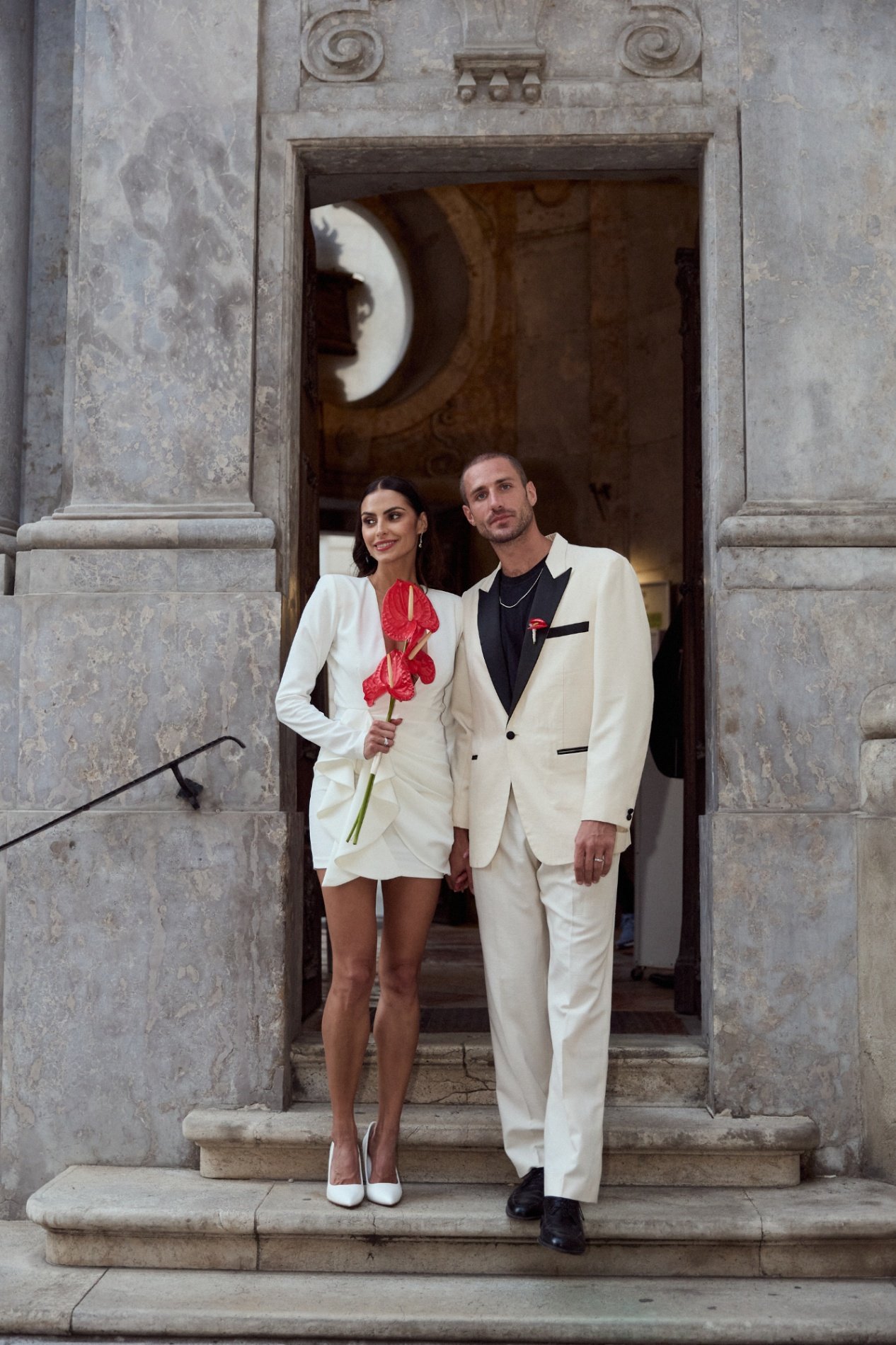
Michaelerplatz is the tighter frame: the Hofburg's domed gateway, the sunken Roman excavation in the middle of the square, and the fiaker horses waiting on the cobbles. It is one minute from the U3 at Herrengasse and it works best early, before the queues form under the dome. Ten minutes away, the Volksgarten's rose beds carry a whole session through June, with the Theseus temple as the backdrop.
Karlsplatz: the church in the water
The Karlskirche's green dome sits behind two Trajan-style columns, and in the Resselpark in front of it a rectangular basin holds Henry Moore's sculpture Hill Arches — the reason to come is the reflection, at dawn or in the blue hour when the dome lights up. Restoration work has been going on here: one of the columns spent part of 2026 under scaffolding and the park around the Wien Museum has been rebuilt, so check what is uncovered before you build a frame around it. U1, U2 and U4 all stop at Karlsplatz.
What clients say about this kind of shoot
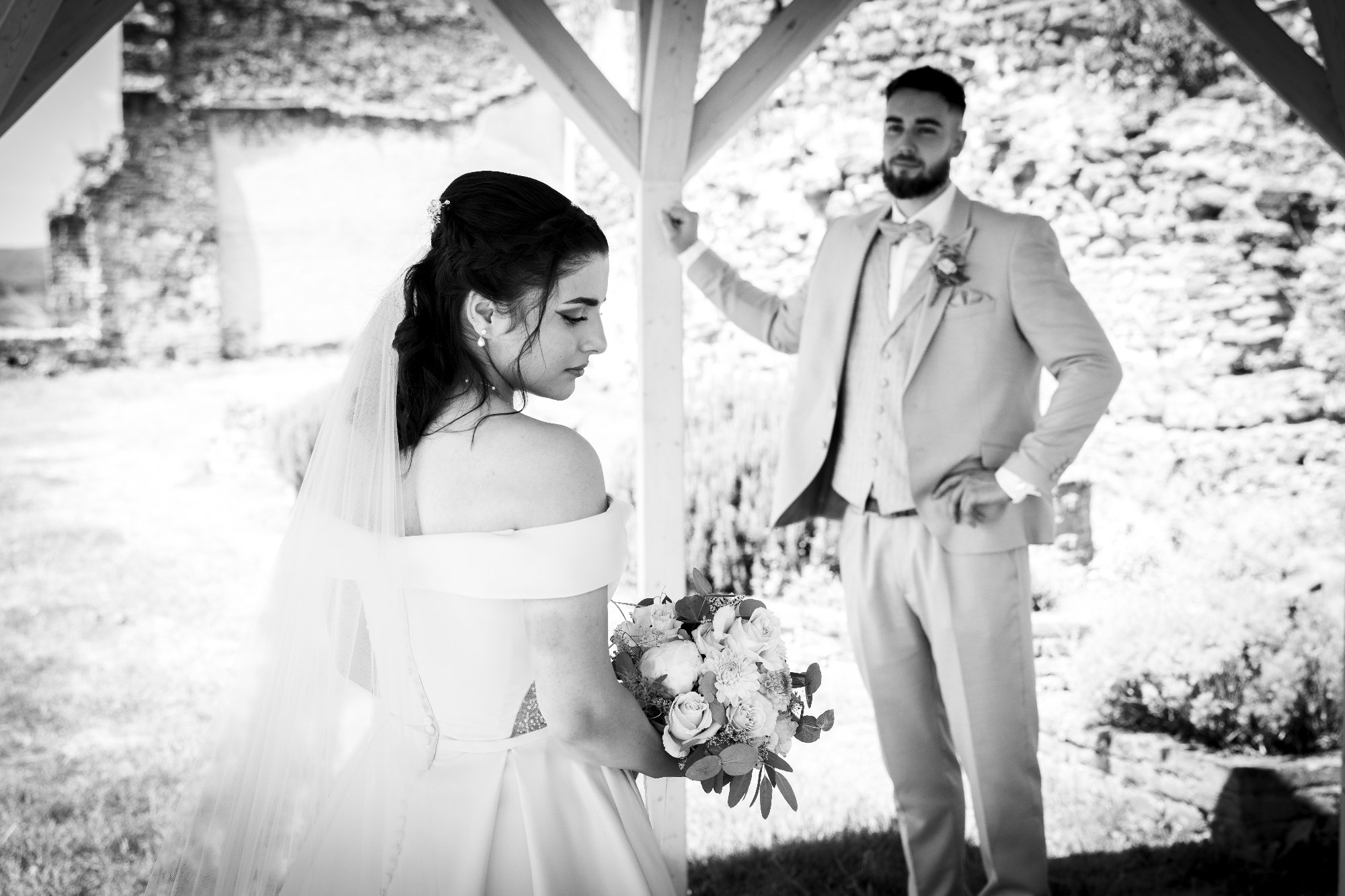
We are overjoyed with the photos from our wedding. Ian and Kiran not only have a fantastic eye for the special moments, they also bring a wonderfully relaxed and caring manner. Our guests were thrilled too! Thank you so much for the priceless memories and for your amazing dedication. We couldn't have wished for a better photographer ♥️
— Behiye O. on Ian P.
Very professional, likeable and easy to work with. The photos turned out beautifully and capture our wedding day in a very special way. We're very happy and can definitely recommend him!
— Tony P. on Ian P.
We're so happy we chose you! From the very first contact, everything was totally hassle-free and pleasant. Both at the pre-wedding shoot and on the wedding day we felt really comfortable with you, and everything was really relaxed and professional. The photos turned out really great and we're absolutely thrilled with the result! You captured the most beautiful moments of our day perfectly and gave us truly lovely memories. Thank you so much for your amazing work! We'd book you again any time and can't recommend you enough! ❤️
— Chelsea B. on Ian P.
Super friendly, creative, dedicated photographers! We clicked right away, they were really accommodating and delivered on time! Absolutely amazing photos that we always love looking at 😍
— Rechusmile on Ian P.
For our wedding, nothing mattered more to us than capturing the special moments and emotions forever. So naturally we had pretty high expectations of our photographers and videographers – and finding them was probably one of the biggest strokes of luck in our wedding. ❤️ On the day itself, we already felt incredibly comfortable with the two of them. They're super friendly, warm-hearted and at the same time absolutely professional. You can tell right away that they know 100% what they're doing, and they still manage to capture the moments completely naturally, without anything feeling posed. At first we even thought we didn't really need a video and were only looking for a photography team. Today we can say: we needed this video!!!🥹 The video truly exceeded our expectations. Watching it feels like living our wedding day all over again – with all the emotions, the voices and the little moments that we ourselves didn't even consciously take in on the day. And the photos turned out simply beautiful too, capturing our day exactly the way we want to remember it. We are incredibly grateful that the two of them were by our side at our wedding and captured these special memories for us. We would choose them again any time and recommend them with all our hearts. ❤️
— Marlene on Ian P.
We first met back in the spring, and getting to know each other was completely easy and went really well! We felt comfortable with Julia right away, so we confirmed that she would photograph our wedding. On the wedding day itself, too, everything was just as it should be. We can't recommend Julia enough!
— Hinum Robert und Angela on Julia H.
Spittelberg and the lanes behind the MuseumsQuartier
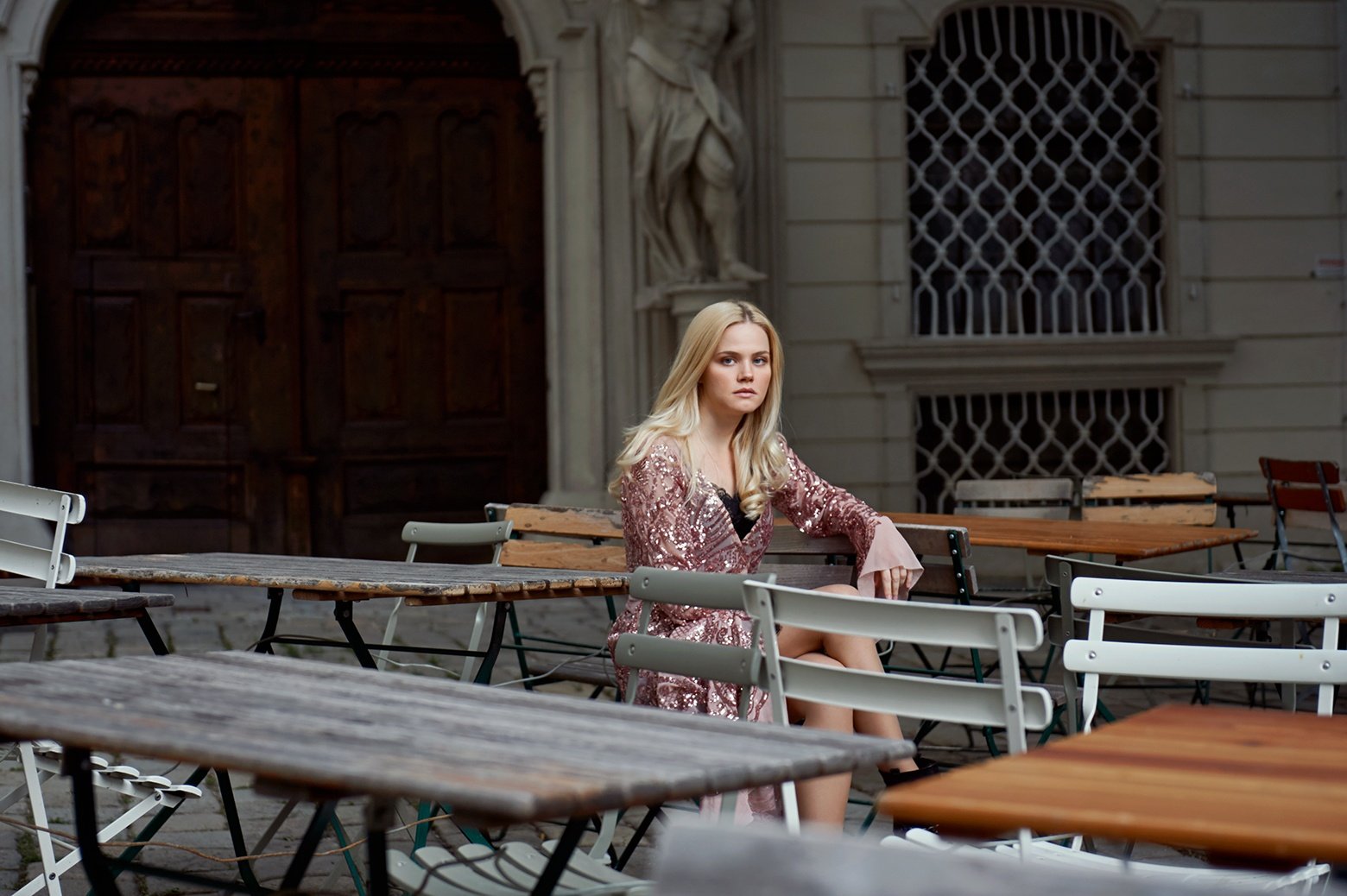
Three cobbled lanes — Spittelberggasse, Gutenberggasse and Schrankgasse — kept their two-storey Biedermeier houses in ochre, rose and pale green, with iron lanterns and courtyard passages. They are narrow enough that direct sun rarely reaches the ground, so the light stays soft from morning to evening and the colour of the façades does the work. Weekday mornings before eleven are empty; from late afternoon the café tables fill up. From mid-November the Christmas market strings lights across the lanes, and dusk — lights on, evening crowd not yet arrived — is the hour to be there. The lanes are public; the courtyards and café terraces are not, so ask. Get off at Volkstheater or Neubaugasse. See Spittelberg's cobbled lanes for the detail.
Naschmarkt, the Prater and the Kahlenberg
The Naschmarkt stalls trade Monday to Saturday and shut on Sundays; on Saturday morning the flea market spreads along the far end from about half past six until mid-afternoon — the least imperial picture in the city. Otto Wagner's Majolikahaus and the gilded Medaillonhaus face the market across the Linke Wienzeile. The ground around the market has been under reconstruction, so check which parts are open. U4 Kettenbrückengasse.
Over the canal, the Prater gives two very different things: the Riesenrad, turning since 1897 at the fairground end, and the Hauptallee, four and a half kilometres of chestnut avenue running dead straight into the park — spectacular in the last hour of light, and empty enough at seven in the morning to stand in the middle of it. Praterstern is on the U1 and U2.
For the end of the day, take the 38A bus from Heiligenstadt up to the Kahlenberg, twenty-five minutes to a public terrace at 484 metres with the Nussberg vineyards, the Danube and the whole city below. It faces away from the setting sun, which is exactly right: the city is lit from behind you, then the lights come on during the blue hour. The best frames are on the walk down through the vines to Nussdorf and Grinzing, roughly forty-five minutes, gold from late September into late October. The vineyards are private working land — stay on the marked paths, especially at harvest.
What the seasons actually change
April brings tulips to the palace gardens; May and June are the easiest months, with long evenings and the roses out. High summer is hazy and hot in the middle of the day, and the palaces are at their busiest. Autumn is the connoisseur's season — clear air, gold on the Nussberg, quiet gardens. Winter is markets and blue hour: the Schönbrunn market from early November into January, the Rathausplatz market from mid-November to 26 December with the ice rink carrying on afterwards, good light gone by half past four, and snow, if it comes at all, usually in January. Market dates shift by a few days each year, so check them.
Planning a Vienna photoshoot
The single decision that matters is the start time. A session that begins at seven in the morning at Schönbrunn or the Belvedere will look like a private garden; the same session at eleven will look like a queue. Sixty minutes is enough for one palace done properly, and 120 minutes covers a palace plus the old town or the Kahlenberg, with a taxi or U-Bahn hop between them. Do not try to fit three districts into an hour — Vienna is generous, but it is not small.
Winter sessions are shorter and later: aim for the hour before the markets light up, and treat the blue hour as the main event rather than a bonus.
A local photographer will know which gate is quiet on a Tuesday and which lane is still in shade at six in the evening — that knowledge is most of what you are booking. You can browse the destination page for Vienna, read what a couples photoshoot usually covers, and book a photographer online; express sessions start at €429 for 60 minutes, all-inclusive.
Want professional photos in Vienna?
Browse portfolios, compare packages, and book a verified local photographer in minutes.