Salzburg Photo Guide: Mirabell, the Mönchsberg and the Sound of Music spots
Salzburg is small enough to photograph end to end in a single walk — the old town is about twenty-five minutes across — and the fortress on its rock ends up in half the frames whether you plan it or not. What decides a session here is not distance and barely even light. It is the calendar. For six weeks in high summer the festival builds a stage on the cathedral square; for six weeks in winter the Christmas market fills the same stones. Both are worth photographing. Neither is what you booked if you were expecting an empty baroque square.
4 photo spots in Salzburg — click a pin to open the full guide
Real shots from Salzburg
Mirabell: the axis everybody comes for
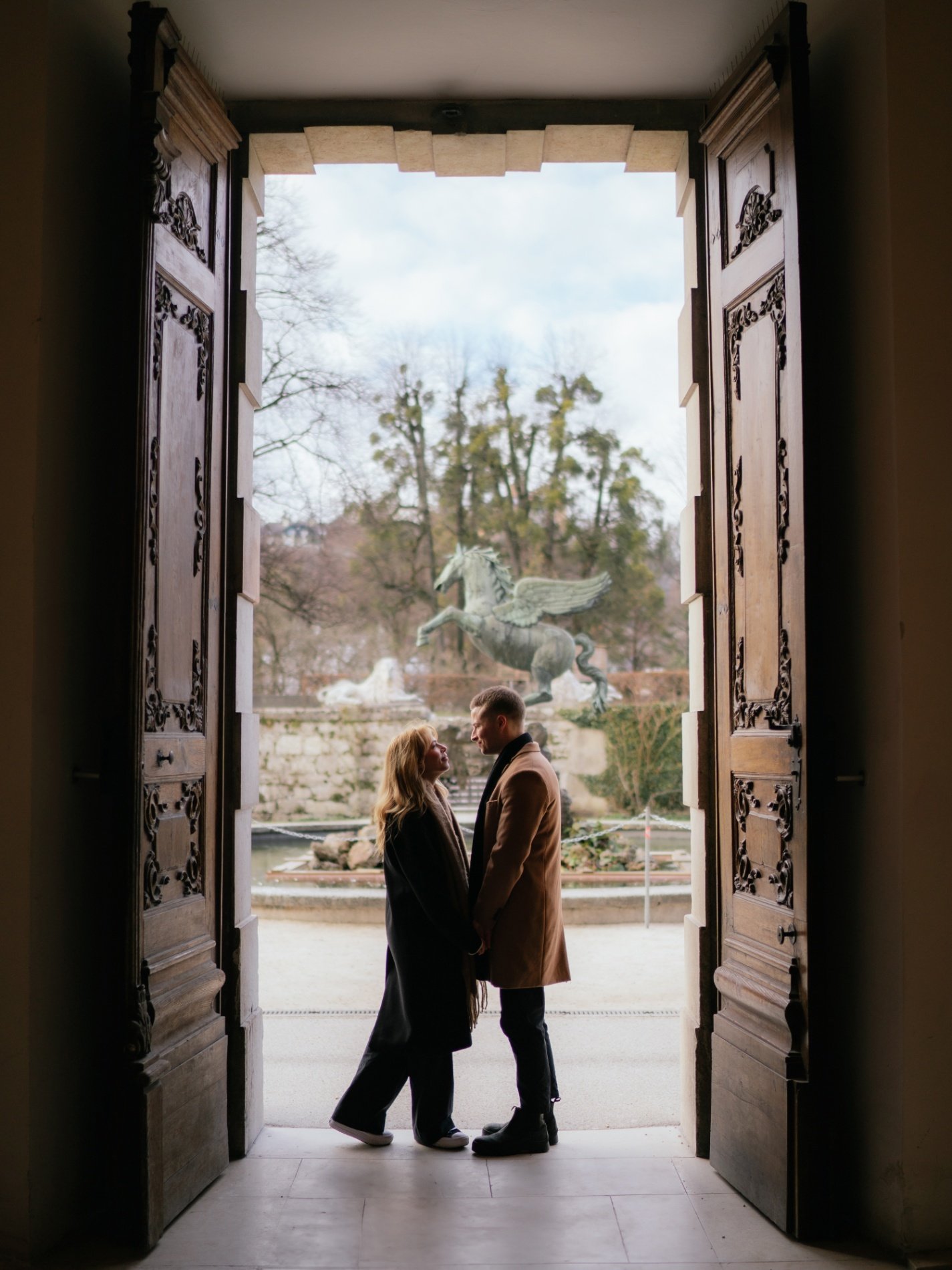
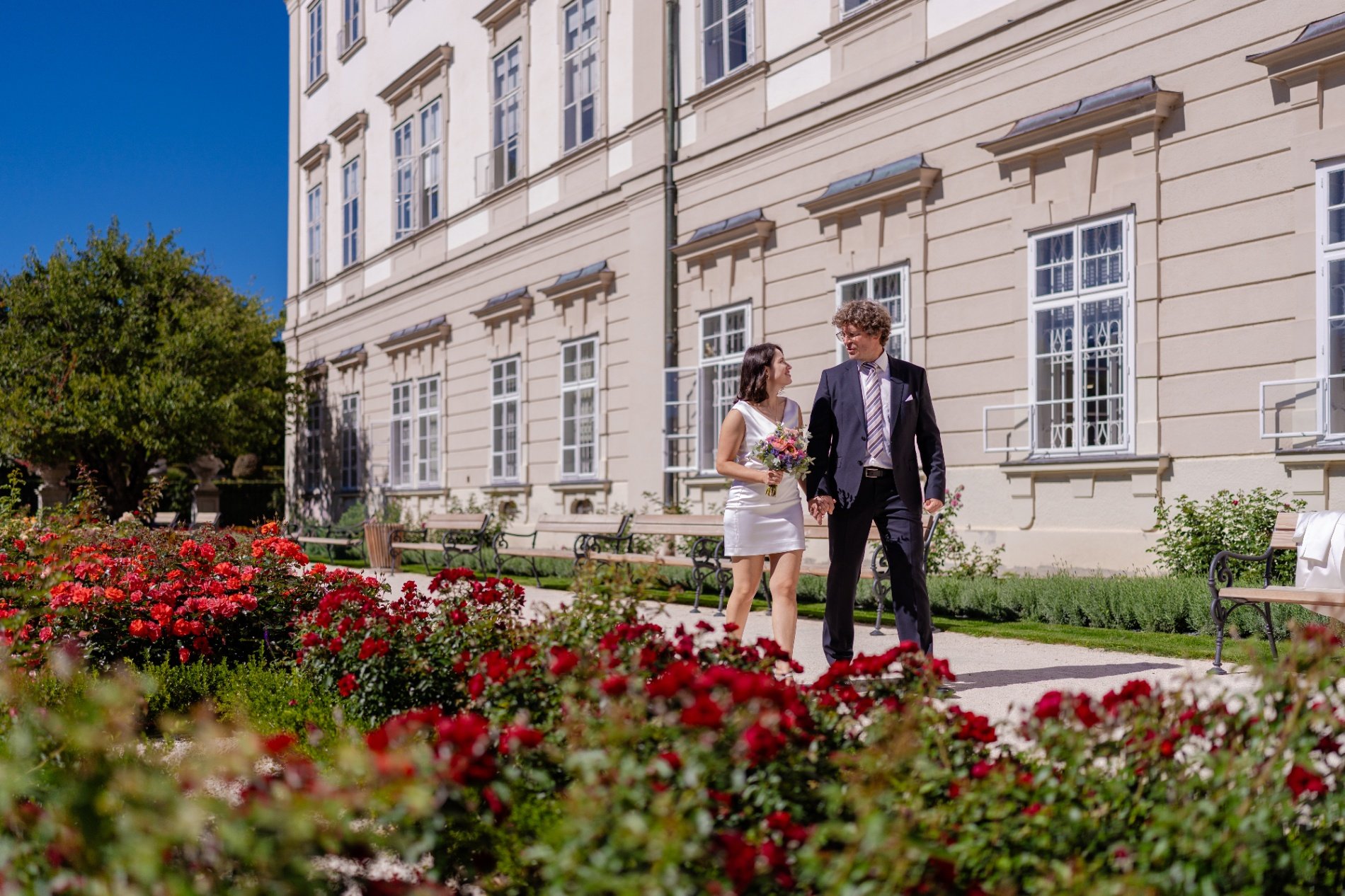
The Mirabell gardens are the one place in Salzburg where the whole skyline arranges itself for you. Stand at the top of the steps by the Pegasus fountain and the main axis runs through the parterre, past the marble figures and the clipped hedges, straight to the cathedral domes and Hohensalzburg on its rock. The rose hill in the western corner and the dwarf garden beyond it are quieter variations on the same view.
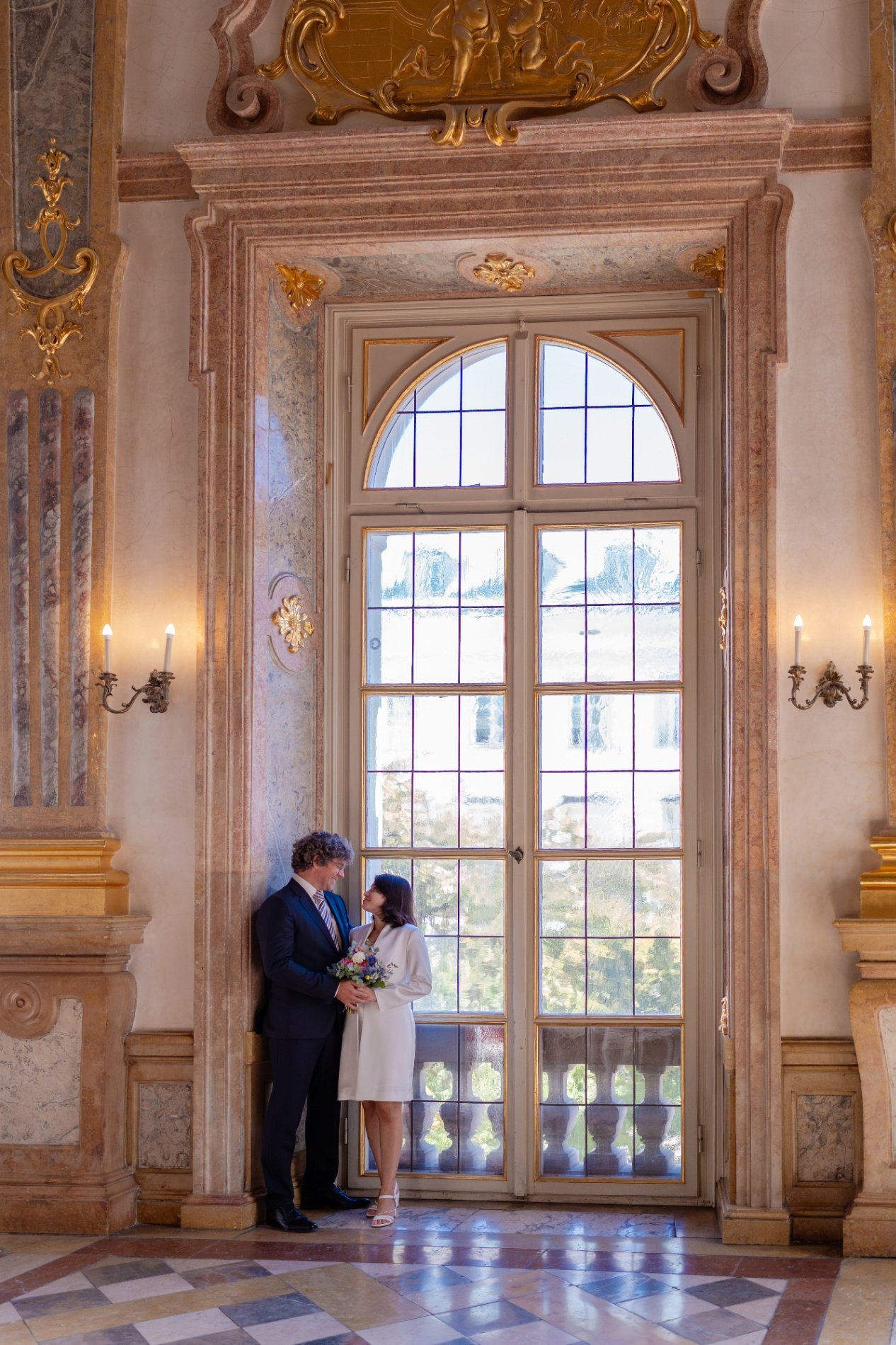
The gardens are free and open from about six in summer and around seven in winter. Before eight you share them with joggers and gardeners; by ten the tour groups own the main path. On Saturdays the palace's marble hall marries couples all day, so wedding parties spill onto the steps from late morning — a nuisance or a scene, depending on your frame. Tulips come in April, the big summer planting runs May to October, then bare earth and hedges. The axis faces south towards the fortress, so morning light comes from the side and the afternoon puts the sun behind the rock; bright overcast is easiest for the flowers. In winter the frame is stone, gravel and hedge, which photographs cleaner than people expect. More on the Mirabell gardens with the fortress behind.
Domplatz and Kapitelplatz, under the cathedral
The cathedral's west front closes Domplatz on one side and arcaded arches close the other three, so the square is a stone room open to the sky. Walk through the southern arch and you are on Kapitelplatz: wider, with the fortress rock straight above, a giant chessboard on the paving, the baroque horse pond in the corner and Stephan Balkenhol's golden sphere with a man standing on top of it. Together they are the old town in two frames, the formal one and the playful one.
Both squares are empty before nine, full of groups from ten and thinning again after five. The cathedral façade faces west and takes the afternoon light; the sphere and the rock above it work best in the last hour, when the stone glows. This is where the calendar bites hardest. The Salzburg Festival runs from mid-July to the end of August — in 2026, 17 July to 30 August — and its stage and grandstands occupy Domplatz for the duration, with free evening screenings on Kapitelplatz from late July. The Christmas market takes both Domplatz and Residenzplatz from around 19 November until New Year. Check the dates before you plan a session on either square. More on Kapitelplatz and Domplatz under the cathedral.
Getreidegasse and the lanes
Getreidegasse is the famous lane: wrought-iron guild signs hanging over a narrow street, Mozart's birthplace at number nine. It is a shopping street first and a photograph second; from ten it is shoulder to shoulder. At eight it is yours, and the passages and courtyards off it stay quiet much longer.
The right bank: the Makartsteg, the river and the Steingasse
The Makartsteg — officially the Marko-Feingold-Steg since 2021, though nobody calls it that — is the footbridge between the Mirabell side and the old town, hung end to end with love padlocks and open to the river on both sides: downstream the fortress and the Kapuzinerberg, upstream the bridges and the domes. It is the natural link in any Salzburg session and a frame in its own right in the evening, when the padlocks catch the low sun.
On either bank the Salzach promenade runs under the old-town façades and the Kapuzinerberg woods, beside the milky green of a glacier-fed river. Choose your bank by what you want behind you: the left bank looks at the Kapuzinerberg, the right bank at the old town. A few minutes upstream on the right bank, the Steingasse runs south from the Steintor along the foot of the hill — a medieval lane one cart wide, cobbled and shuttered, where Joseph Mohr, who wrote the words of Silent Night, was born at number nine. The rock keeps it in shade, so the light is soft from morning to evening and the plaster colours carry the picture.
What clients say about this kind of shoot
We are overjoyed with the photos from our wedding. Ian and Kiran not only have a fantastic eye for the special moments, they also bring a wonderfully relaxed and caring manner. Our guests were thrilled too! Thank you so much for the priceless memories and for your amazing dedication. We couldn't have wished for a better photographer ♥️
— Behiye O. on Ian P.
Very professional, likeable and easy to work with. The photos turned out beautifully and capture our wedding day in a very special way. We're very happy and can definitely recommend him!
— Tony P. on Ian P.
We're so happy we chose you! From the very first contact, everything was totally hassle-free and pleasant. Both at the pre-wedding shoot and on the wedding day we felt really comfortable with you, and everything was really relaxed and professional. The photos turned out really great and we're absolutely thrilled with the result! You captured the most beautiful moments of our day perfectly and gave us truly lovely memories. Thank you so much for your amazing work! We'd book you again any time and can't recommend you enough! ❤️
— Chelsea B. on Ian P.
Super friendly, creative, dedicated photographers! We clicked right away, they were really accommodating and delivered on time! Absolutely amazing photos that we always love looking at 😍
— Rechusmile on Ian P.
Dreamy wedding photos and incredible speed! We couldn't have wished for a better photographer for our special day than Jessica! Even getting to know her in person before the wedding completely convinced us, and we weren't disappointed. She has a wonderful, pleasant manner, so we felt great in front of the camera from the first second. The pictures turned out simply beautiful and capture the emotions of the day perfectly. Another absolute highlight was the speed: we got our finished photos and the highlight video incredibly fast! Dear Jessica, a thousand thanks for these unforgettable memories. We recommend you with all our hearts!
— Bianca B. on Jessica L.
For our wedding, nothing mattered more to us than capturing the special moments and emotions forever. So naturally we had pretty high expectations of our photographers and videographers – and finding them was probably one of the biggest strokes of luck in our wedding. ❤️ On the day itself, we already felt incredibly comfortable with the two of them. They're super friendly, warm-hearted and at the same time absolutely professional. You can tell right away that they know 100% what they're doing, and they still manage to capture the moments completely naturally, without anything feeling posed. At first we even thought we didn't really need a video and were only looking for a photography team. Today we can say: we needed this video!!!🥹 The video truly exceeded our expectations. Watching it feels like living our wedding day all over again – with all the emotions, the voices and the little moments that we ourselves didn't even consciously take in on the day. And the photos turned out simply beautiful too, capturing our day exactly the way we want to remember it. We are incredibly grateful that the two of them were by our side at our wedding and captured these special memories for us. We would choose them again any time and recommend them with all our hearts. ❤️
— Marlene on Ian P.
Height: the Mönchsberg terrace and the fortress
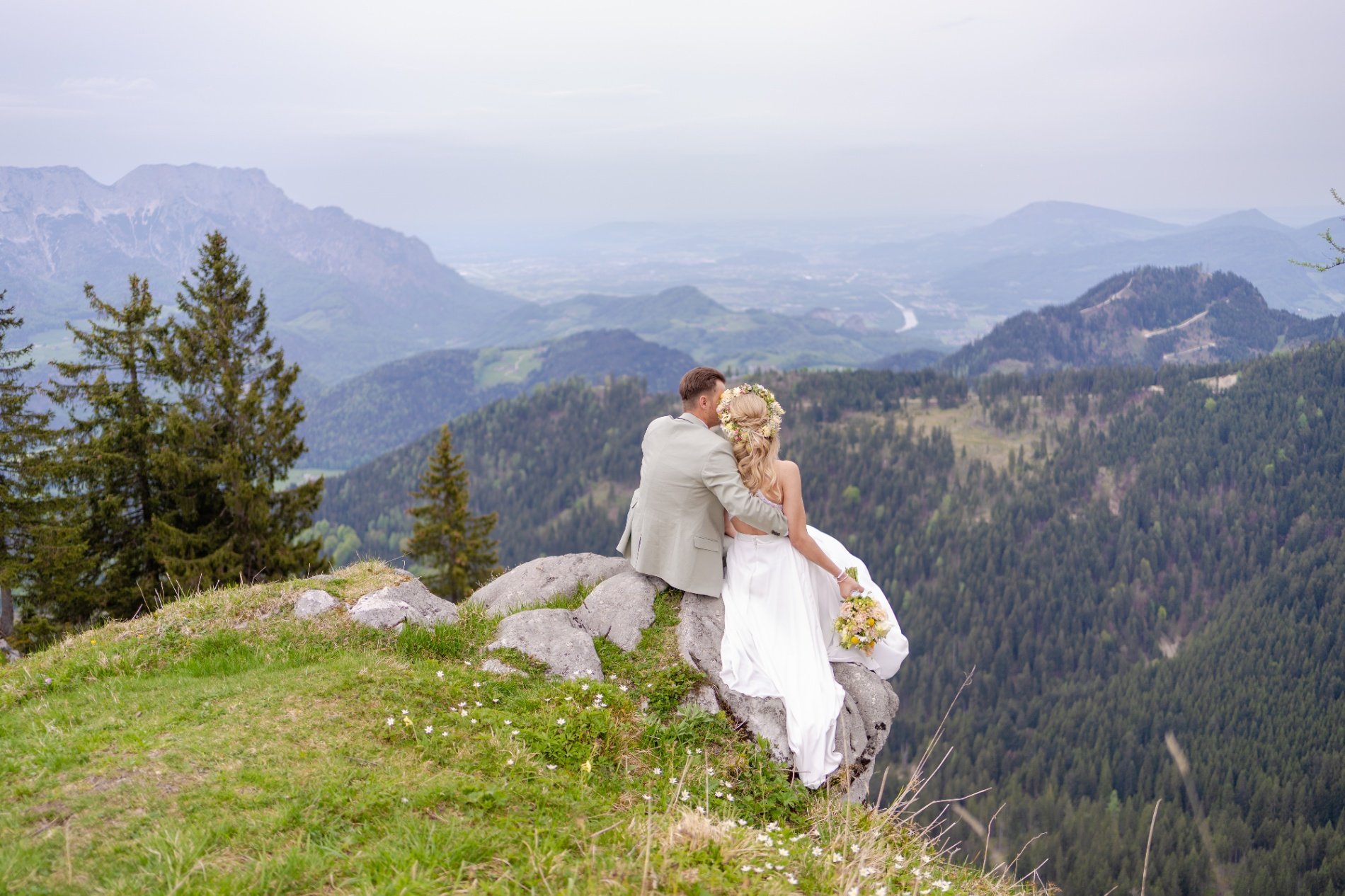
The Mönchsberg is the wooded ridge walling the old town on its western side, and the terrace beside the Museum der Moderne at its northern end is the city's panorama: cathedral and Kollegienkirche domes, the roofs of the Getreidegasse, the river and its bridges, the Kapuzinerberg opposite and the fortress on its rock, all in one frame. The Mönchsberg lift on Gstättengasse takes a minute; the steps from Toscaninihof or the Festungsgasse take ten and are free. The terrace looks east and south-east, so it is backlit in the morning and comes into its own in the afternoon — the last hour before sunset lights the whole old town from behind you, and the blue hour puts the floodlit fortress above the lit windows.
The lift runs year-round with hours that change by season, and the fortress funicular leaves from Festungsgasse at the top of Kapitelplatz on its own seasonal timetable; check the last descent before planning an evening up there. From the terrace a path runs south along the ridge for about half an hour towards the fortress, with a different slice of the view every few minutes. Details on the Mönchsberg viewpoint over the old town.
The Kapuzinerberg on the other bank is the underused twin: steps climb from the Linzergasse past the stations of the cross to the monastery and on to the Franziskischlössl, and the openings in the trees look straight across at the old town. It is steeper, quieter and gold in late October.
The Sound of Music spots that still photograph well
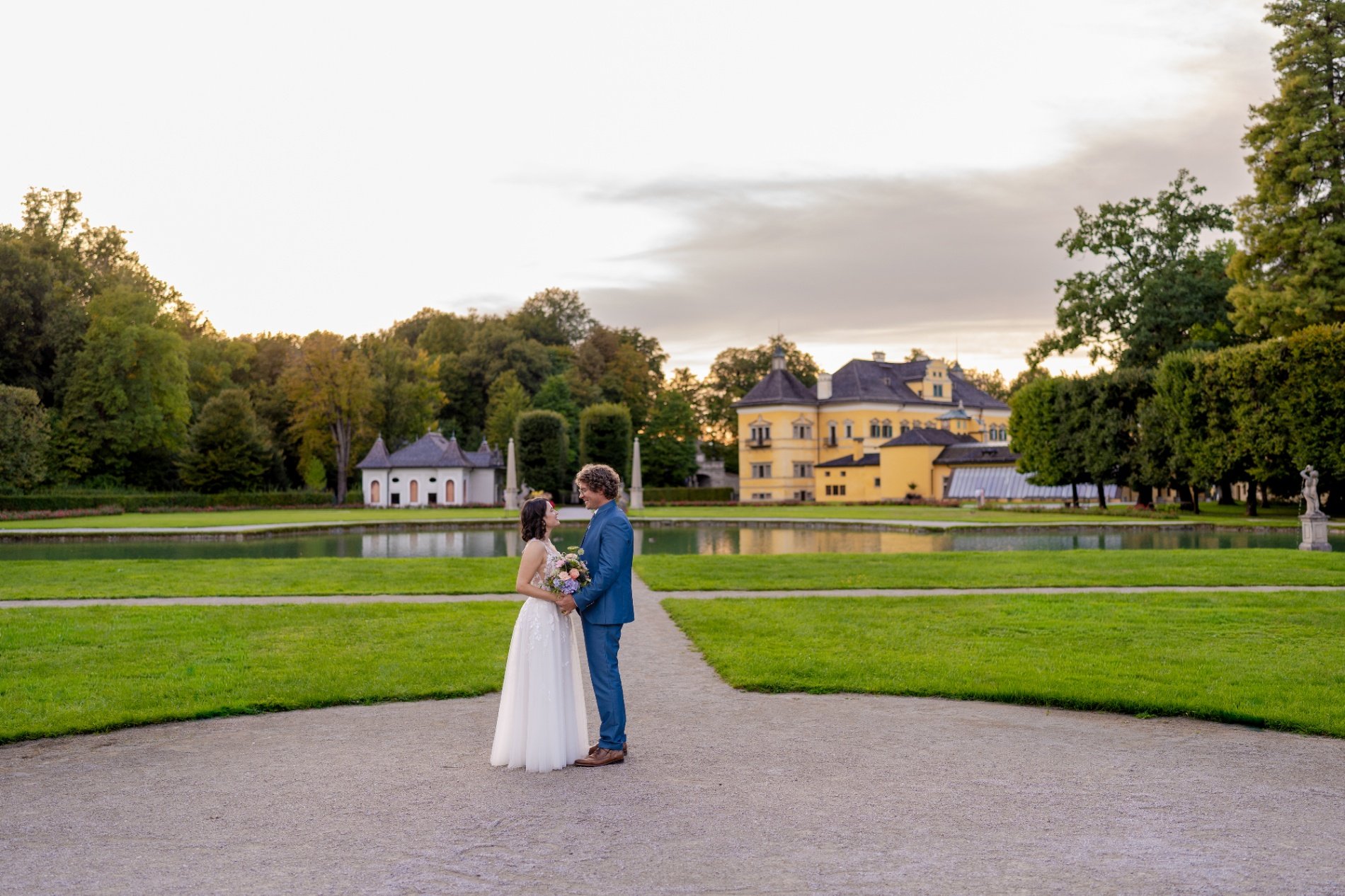
Three of the film's locations are genuinely good frames, and one is a trap. Mirabell's steps, the Pegasus fountain and the dwarf garden carry the Do-Re-Mi sequence and are free and open from dawn. The glass gazebo now stands in the park at Hellbrunn, south of the city: you can walk around it and photograph through the glass but not go inside, and the palace and its trick fountains run a season of roughly late March to the beginning of November, so check the dates in the shoulder months. Nonnberg Abbey above the old town is a working convent, and worth treating as one.
The trap is Schloss Leopoldskron. The house is a private hotel and the grounds are not open, but almost nobody realises the gravel path along the western shore of the Leopoldskroner Weiher is public — and that is where the picture is anyway, with the palace, its reflection and the fortress behind it. Twenty minutes on foot from the old town, and best in the early morning when the water is still.
The calendar, in one paragraph
Late July to the end of August is festival season: the city is full, the evening light is long, and Domplatz is a building site with a stage on it. September and early October are the best weeks of the year — clear air, warm stone, gardens still planted, no queues. From around 19 November the Christmas market takes the cathedral squares until New Year, the good light is gone by four in the afternoon and the fortress glows above the huts. January and February are cold, empty and often the sharpest air of all, with snow on the fortress roofs as the reward. Dates move a little every year; check before you book.
Planning a Salzburg photoshoot
Because the old town is compact, one hour genuinely covers a lot: Mirabell, the bridge and the river, or the two cathedral squares and a lane. Two hours lets you add height — the Mönchsberg terrace or the fortress — and that is the version most couples want — the panorama and the parterre are two different pictures.
Start at seven or half past in summer, and mid-afternoon in winter so the session ends in the blue hour. Check the festival and market dates first: they do not spoil a shoot, but they change where you stand. And if a proposal is the point, the Mönchsberg ridge path and the Leopoldskron shore are the two places in Salzburg where you can be alone with a view.
A photographer who works here weekly knows which arch is in shade at six and which morning the river is flat. Have a look at the Salzburg destination page, see what a couples photoshoot includes, and book a photographer online; express sessions start at €429 for 60 minutes, all-inclusive.
Want professional photos in Salzburg?
Browse portfolios, compare packages, and book a verified local photographer in minutes.