Honeymoon Photoshoot in the Austrian Lakes: Hallstatt, Wolfgangsee, Achensee
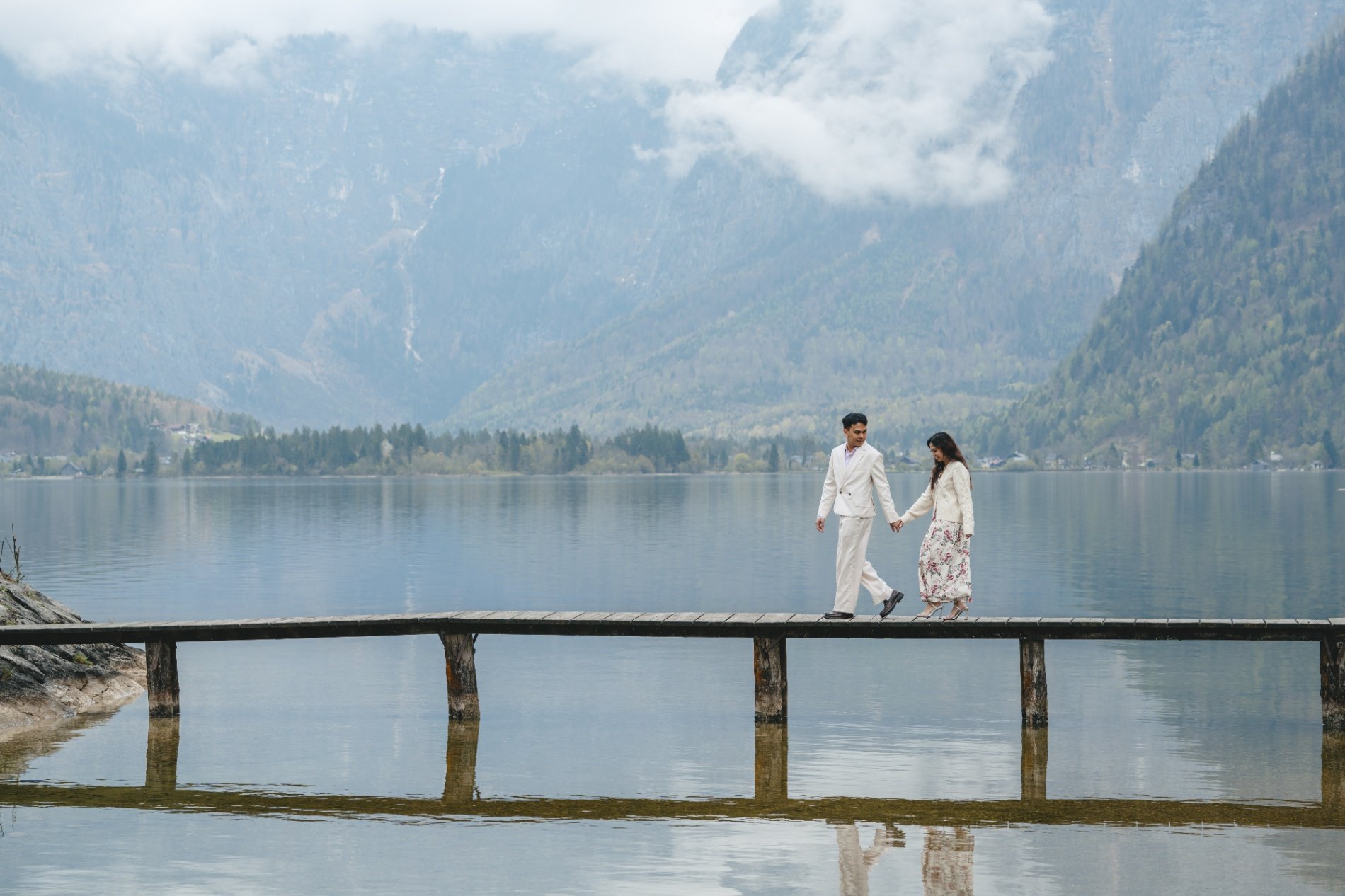
Austria's lakes are not one destination, and the honeymoons that go wrong are the ones that treat them as one. Hallstatt and the Wolfgangsee sit about half an hour apart in the Salzkammergut. The Achensee is in Tyrol, roughly an hour and forty minutes from Salzburg on the motorway. The Wörthersee is in Carinthia, about two hours south over the Tauern with tolls on the way. Each hands you a completely different picture — a village stacked on a cliff shelf, a painted lakefront under a rack railway, a nine-kilometre trench between two mountain ranges, warm turquoise water ringed with belle-époque villas — and each hands it over at a specific hour, usually before nine in the morning. The plan that works is one lake a day, one hour per lake that genuinely matters, and no long drive on the morning you shoot.
One lake a day, and three is the ceiling
The distances look small on a map and are not: these are valley roads with lake shores, tunnels and coach traffic on them. A honeymoon week holds three lakes comfortably. Four is a driving holiday with a camera in the boot.
The pairing that costs least time is Hallstatt and the Wolfgangsee, both in the Salzkammergut and both an easy drive from Salzburg — about an hour and a quarter to Hallstatt, which makes the city the sensible base for the first half of a trip. From there the Achensee is a straight run west on the motorway, and the Wörthersee is a southern detour that only pays if you are heading towards Italy or Slovenia anyway.
Book the shoot for the morning after you arrive at a lake, not the afternoon you drive in. None of these places is worth photographing at noon in July.
Hallstatt: the dawn hour, and nothing else
Hallstatt is one street deep and a mountain high, and the frame depends entirely on the clock. The picture that brought you here — the pointed spire on the shore, the pastel houses stacked against the rock, the Dachstein closing the valley — is taken from the lakeside road at the north end of the village, on Gosaumühlstraße, where the pavement widens into a viewpoint three or four metres long. At sunrise it is yours. By ten the coaches have arrived and the railing is three deep in phones until about four.
The village faces east across the water and the ridge opposite holds the sun back until mid-morning, so the first hour after dawn is soft, shadowless and often misty over the lake: no direct light, no crowd, swans on the shallows.
Down at water level, the boat landing by the Marktplatz and the old Seehütten — timber boathouses on stilts over the water — give the same village on the flat. The centre is closed to visitors' cars, so park in the numbered car parks above and walk in. The salt-mine funicular up to the skywalk is worth doing if it is running: its dates and last ascent change and it has had long closures, so check before building a morning around it.
The Wolfgangsee: a boat, a rack railway and a pier
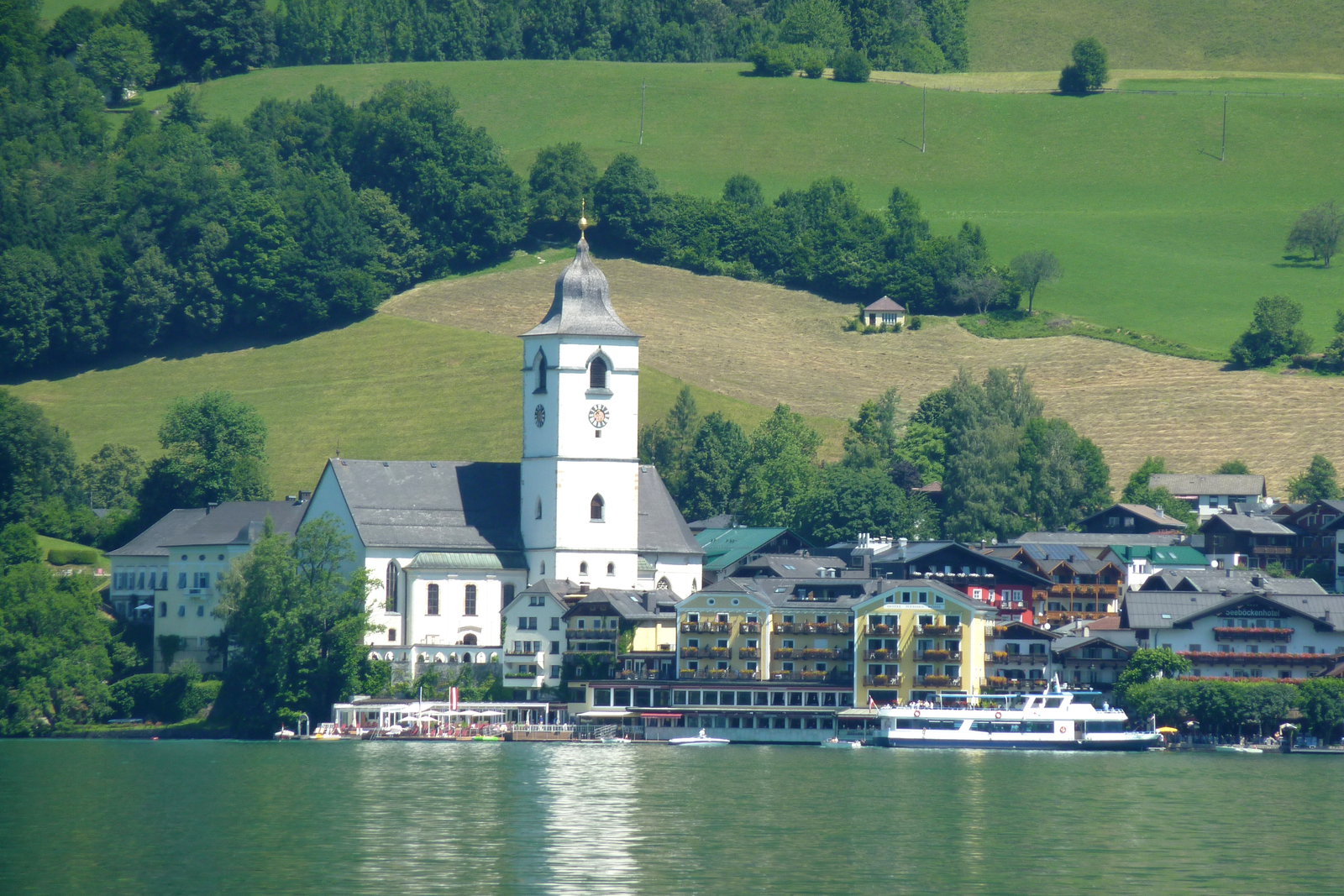
Half an hour north-west, St. Wolfgang is the opposite kind of lake village: a painted lakefront facing south, a white pilgrimage church tower above it, and a green ridge behind. Because the front faces south it is lit from mid-morning and glows in the last two hours of the day — the one lake on this list where an evening session beats a dawn one.
The classic frame is from the water. The lake boats run roughly from spring to early November, and the crossing from Strobl or St. Gilgen gives you the village in three clean bands from the deck; St. Gilgen, on the far shore and already in the province of Salzburg, is about fifteen minutes away. From land, the pier at the Weißes Rössl puts you a few metres out over the water with the hotel front on one side and the church tower behind it.
Above it all, the Schafbergbahn has been climbing to 1,732 metres since 1893. It takes about 35 minutes, runs roughly from late spring to the start of November and not at all in winter, and the summit ridge holds the Wolfgangsee, the Mondsee and the Attersee in one turn — see the Schafberg summit and the rack railway. Take the first train: clearest air, softest light, a summit that may be yours for twenty minutes. Book ahead in July and August, bring a windproof layer whatever the valley thermometer says, and confirm the last train down.
What clients say about this kind of shoot
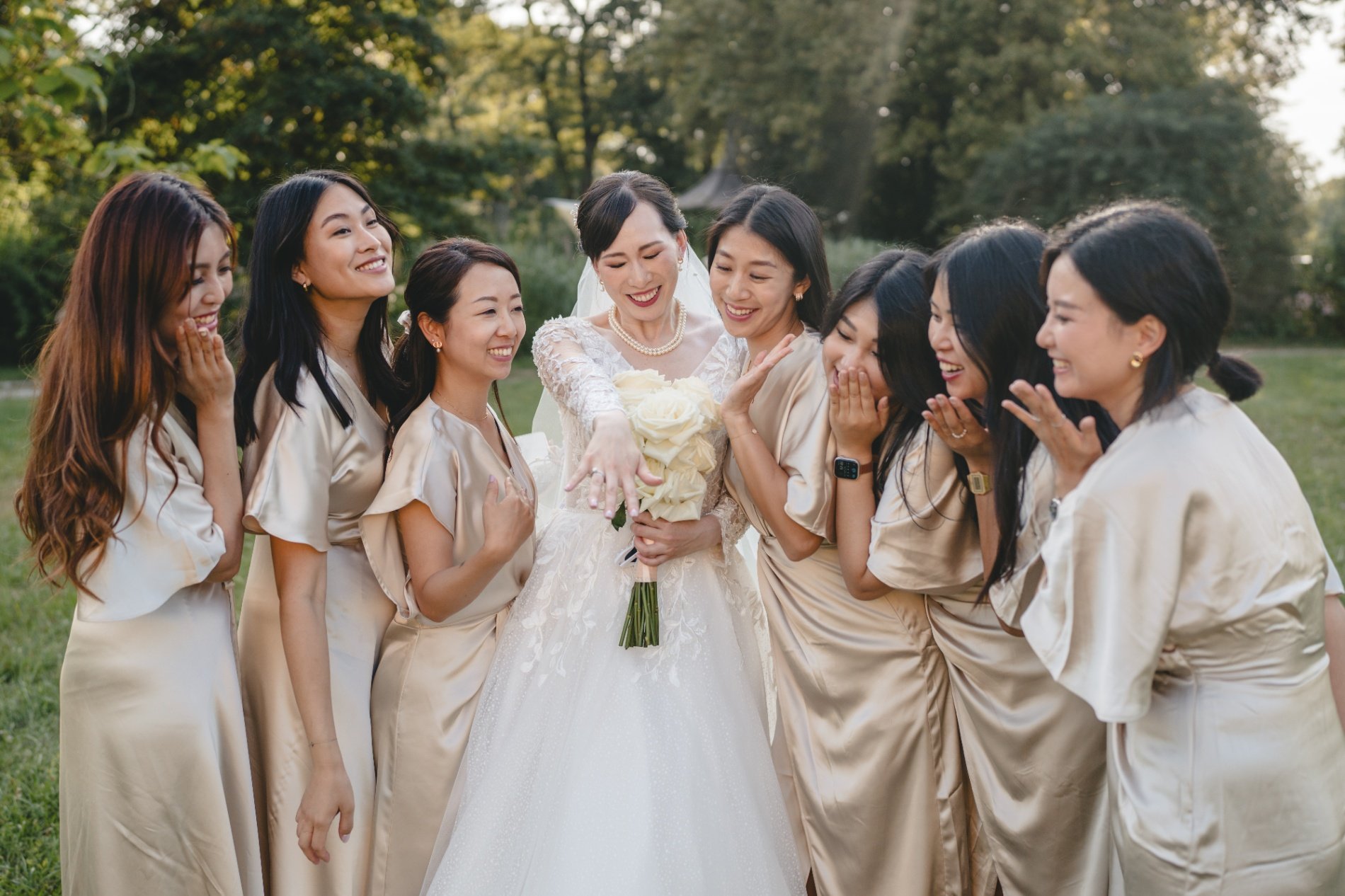
We are overjoyed with the photos from our wedding. Ian and Kiran not only have a fantastic eye for the special moments, they also bring a wonderfully relaxed and caring manner. Our guests were thrilled too! Thank you so much for the priceless memories and for your amazing dedication. We couldn't have wished for a better photographer ♥️
— Behiye O. on Ian P.
We're so happy we chose you! From the very first contact, everything was totally hassle-free and pleasant. Both at the pre-wedding shoot and on the wedding day we felt really comfortable with you, and everything was really relaxed and professional. The photos turned out really great and we're absolutely thrilled with the result! You captured the most beautiful moments of our day perfectly and gave us truly lovely memories. Thank you so much for your amazing work! We'd book you again any time and can't recommend you enough! ❤️
— Chelsea B. on Ian P.
Very professional, likeable and easy to work with. The photos turned out beautifully and capture our wedding day in a very special way. We're very happy and can definitely recommend him!
— Tony P. on Ian P.
Super friendly, creative, dedicated photographers! We clicked right away, they were really accommodating and delivered on time! Absolutely amazing photos that we always love looking at 😍
— Rechusmile on Ian P.
Dreamy wedding photos and incredible speed! We couldn't have wished for a better photographer for our special day than Jessica! Even getting to know her in person before the wedding completely convinced us, and we weren't disappointed. She has a wonderful, pleasant manner, so we felt great in front of the camera from the first second. The pictures turned out simply beautiful and capture the emotions of the day perfectly. Another absolute highlight was the speed: we got our finished photos and the highlight video incredibly fast! Dear Jessica, a thousand thanks for these unforgettable memories. We recommend you with all our hearts!
— Bianca B. on Jessica L.
For our wedding, nothing mattered more to us than capturing the special moments and emotions forever. So naturally we had pretty high expectations of our photographers and videographers – and finding them was probably one of the biggest strokes of luck in our wedding. ❤️ On the day itself, we already felt incredibly comfortable with the two of them. They're super friendly, warm-hearted and at the same time absolutely professional. You can tell right away that they know 100% what they're doing, and they still manage to capture the moments completely naturally, without anything feeling posed. At first we even thought we didn't really need a video and were only looking for a photography team. Today we can say: we needed this video!!!🥹 The video truly exceeded our expectations. Watching it feels like living our wedding day all over again – with all the emotions, the voices and the little moments that we ourselves didn't even consciously take in on the day. And the photos turned out simply beautiful too, capturing our day exactly the way we want to remember it. We are incredibly grateful that the two of them were by our side at our wedding and captured these special memories for us. We would choose them again any time and recommend them with all our hearts. ❤️
— Marlene on Ian P.
The Achensee: a flat green shore under a vertical wall
The Achensee lies at 929 metres in a trench between the Karwendel and the Rofan — nine kilometres long, rarely a kilometre wide, and the first sight of it reads more like a fjord than an alpine lake. Pertisau is the one flat shore: a level promenade, old trees, and wooden jetties pushing into the water with the Karwendel going straight up out of the lake opposite, unbuilt for its whole length. Walk out onto a jetty rather than shooting from the promenade, where moored boats crowd the foreground. More on the Pertisau lakeshore.
The bay faces east, so the morning light crosses the water and lights the far wall while the shore is still soft. That reverses after midday, when the mountain behind the village throws the promenade into shadow and the wind gets up and kills the reflections until evening. Morning, then.
Two things are worth a second session. The Rofan cable car climbs from Maurach to 1,834 metres in about eight minutes and puts all nine kilometres of water below you with no hiking at all; it is ten to fifteen degrees colder and much windier up there, and its operating dates change by season. And the Gaisalm, halfway along the roadless western shore, is the only alpine hut in Tyrol you reach by boat — the alternative is about ninety minutes of narrow rocky path from Pertisau, no route for long dresses or smooth soles. Check the last sailing back before you go out.
The lake boats run roughly May to October, and so does the Achenseebahn, a coal-fired cog railway from 1889 that still pushes wooden carriages up from Jenbach — black iron and steam against alpine meadow, thickest on a cool morning and almost invisible in midsummer heat.
The Wörthersee: warm water and a different country of light
If the honeymoon runs south, the Wörthersee is the one lake here you will actually want to swim in: the warmest large lake in the Alps, up to 26 degrees in high summer, in a turquoise-green no other Austrian lake quite matches. Velden closes the western end with a white Renaissance castle and a promenade of plane trees and jetties, and because the town faces east, sunrise is the strongest hour of the day here — the light comes straight up the lake into the promenade.
Maria Wörth is the picture the lake is sold on: two churches on a low wooded headland with water on three sides, best shot from off the headland rather than on it, in the last two hours of daylight. Pörtschach's peninsula gives a level twenty-minute circuit with open water on both sides. And the Pyramidenkogel tower — about a hundred metres of larch beams above the southern shore — puts the whole lake, Klagenfurt and the Karawanken in one look, on open decks that are always windy and shut in storms; hours are seasonal, so check before driving up. July and August are loud; from late September the villas empty, the water goes glassy and the colour peaks.
Winter on the same lakes
Everything above assumes green water and open boats. Winter is a different trip and, for a couple, often a better one. Hallstatt in December and January is quieter than at any other time of year, snow on the roofs and the blue hour arriving around half past four. St. Wolfgang empties completely — no boats, no rack railway, mist on the water, an Advent market on the shore in December. The Achensee stays open water while the ridges above go white.
Winter costs you options: the boats, the summit railways and most cable cars stop or run short timetables, and the good light is gone by four. What it gives you is empty frames.
Planning a honeymoon photoshoot in the Austrian lakes
Book the hour, not the day. On these lakes an hour of the right light beats a whole afternoon of the wrong kind, and a 60-minute session at dawn on one shore will always beat two hours spent driving between three. If you want a shore and a summit in one session, allow 120 minutes and accept that the cable car sets the schedule, not you.
Sessions run 60, 120 or 180 minutes at €429, €509 and €749 all-inclusive, and the photographer comes to the lake you have chosen. A local photographer who works that shore knows which jetty is in the sun at seven and which viewpoint has a coach park behind it.
Start from the destination page for Hallstatt, St. Wolfgang or the Achensee, see what a honeymoon shoot covers, then browse the photographers.
Want professional photos in Hallstatt?
Browse portfolios, compare packages, and book a verified local photographer in minutes.