Graz Photo Guide: the Schlossberg clock tower, the red roofs and the island in the Mur
Graz is the easiest Austrian city to photograph in one session, because the whole postcard fits inside a single loop. A wooded rock with a clock tower on it stands in the middle of town; below it a field of red tiles that has been on the UNESCO list since 1999; five minutes west, a river with a blue blob of a museum on one bank and a steel island moored in the current. Nothing is more than a twenty-minute walk from anything else. What decides whether the day works is which way each thing faces: the hill terrace looks west and belongs to the evening, the arcaded courtyards hold soft shade at noon, and the river reads best under flat cloud.
4 photo spots in Graz — click a pin to open the full guide
The Schlossberg: three ways up, and the hour that matters
The Schlossberg rises straight out of the old town, and the Uhrturm is what survived on it. When Napoleon's troops razed the fortress in 1809 the citizens bought the clock tower and the bell tower back; the clock still runs with what looks to a modern eye like the wrong hands, the long one showing the hours, because from the town below that was the only figure anybody needed.
There are two frames up here and they face opposite ways. The tower stands best from the terrace to its south-east, with the wooden gallery and the shingled roof against open sky. Turn round and the parapet gives you the city: red tiles out to the Mariahilf towers, the Mur cutting across, the Styrian hills behind. The terrace looks west, so the last two hours of daylight are the good ones. Before nine the paths are empty, which is the other reason to come, though the town below sits in its own shade until the sun clears the hill.
Three ways go up. The Schlossbergbahn funicular has climbed from the Kaiser-Franz-Josef-Kai since 1894 on a gradient of around 61 per cent, takes a minute and a half, and has a glass roof that makes the ride itself worth photographing; it runs on an ordinary Graz Linien ticket for the central zone. The glass lift is driven straight up through the inside of the rock from Schlossbergplatz in about a minute. Beside it the Kriegssteig zigzags up the cliff face — 260 steps cut by prisoners of war and opened in 1918, still called the Russensteig by older locals. Fares and running times move with the season, so check rather than assume; the terrace itself costs nothing. More on the Uhrturm terrace on the Schlossberg.
Herrengasse, Hauptplatz and the lanes underneath
The old town at street level is a working city rather than a museum quarter, and that is what makes it photograph well. Hauptplatz has the town hall on one side, the Erzherzog-Johann fountain in the middle and a tram every couple of minutes through the frame. Do not fight the trams: the central sections around Jakominiplatz, Hauptplatz and Schlossbergplatz are a free-travel zone, so a red tram sliding behind a subject is easier to plan for than an empty square.
From Hauptplatz the Herrengasse runs south under arcades; number 3 is the Herzogshof, the Gemaltes Haus, its whole front covered in eighteenth-century frescoes and the best single wall in the city. Going the other way, the Sporgasse climbs narrow and cobbled towards Schlossbergplatz and stays in shade most of the day. Off it, Glockenspielplatz has a carillon that plays at 11, 3 and 6, when two carved figures in folk costume turn in a gable window; a small crowd gathers beforehand, so either use them or wait them out. Behind the opera house, the farmers' market on Kaiser-Josef-Platz runs six mornings a week and is fullest between eight and noon.
The Landhaus courtyard, for noon and for rain
The Landhaus on the Herrengasse has been the seat of the Styrian estates since the sixteenth century, and Domenico dell'Allio's courtyard of 1557 to 1565 is the purest piece of Italian Renaissance in Austria: three tiers of round-arched loggias on all four sides, a bronze well canopy of 1590 in the middle, creeper over the lower arches in summer.
The value here is the light. The arcades are deep enough to throw an even, soft shade on the brightest day, and the repeating arches frame in whichever direction you point. Stand under the ground-floor loggia and shoot across the yard; stand on the first gallery and shoot down the arcade line for the receding arches. It is a working parliament building, so the courtyard keeps office hours, closes while events are built in it, and carries a summer stage in July and August. Access rules change — check before the day.
The Mur: the Kunsthaus and the Murinsel
Both arrived in 2003, the year Graz was European Capital of Culture, and together they give the city its second face. The Kunsthaus — the Friendly Alien of Peter Cook and Colin Fournier — is a blue acrylic bubble grafted onto a cast-iron hall of 1847, with nozzle-like skylights on its back and a glazed arm, the Needle, jutting over the Lendkai. After dark its river front becomes a low-resolution screen of around nine hundred fluorescent rings.
The Murinsel is Vito Acconci's steel shell, moored mid-river and linked to both banks by footbridges, half open amphitheatre and half café. From inside it you shoot back at the old town; from the Mariahilferplatz bank you get the island, the water and the Schlossberg in one frame. Bright overcast or the last hour of the day are the two conditions that work — in hard midday sun the blue skin reads grey. The island closes now and then for maintenance or high water on the Mur, so check that it is open before you build a session around it. More on the Kunsthaus and the Murinsel.
What clients say about this kind of shoot
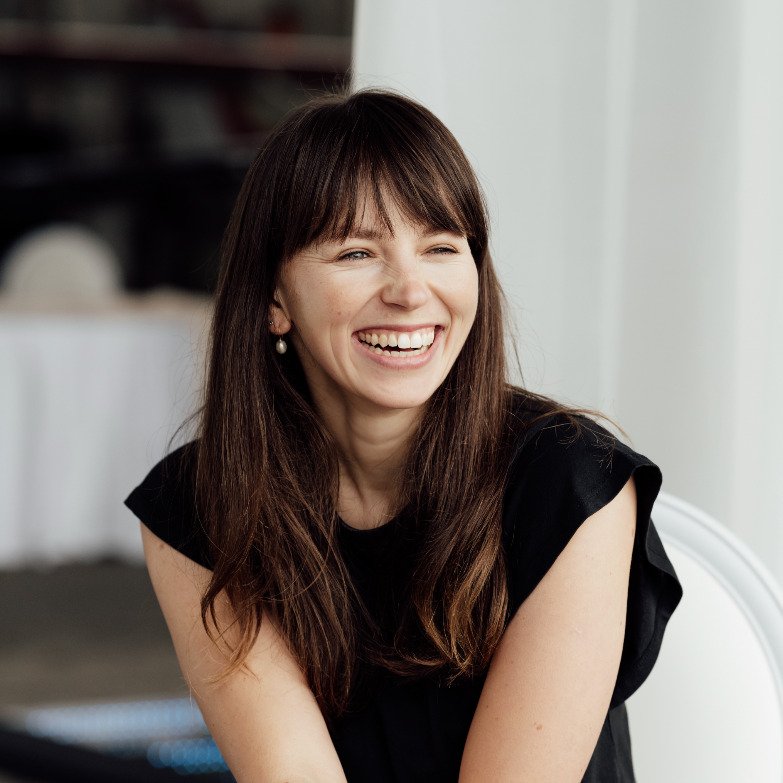
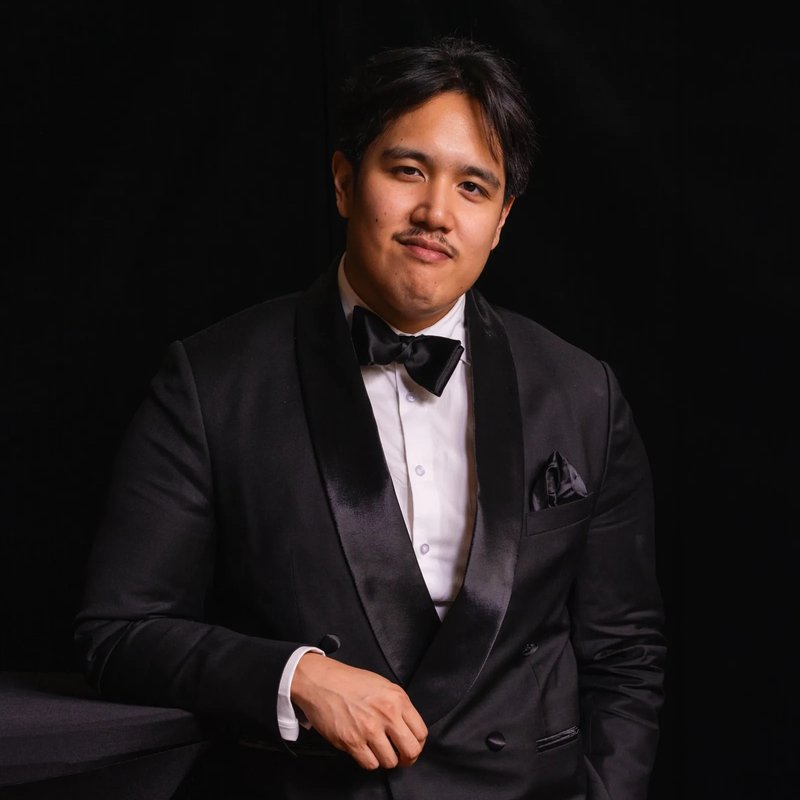
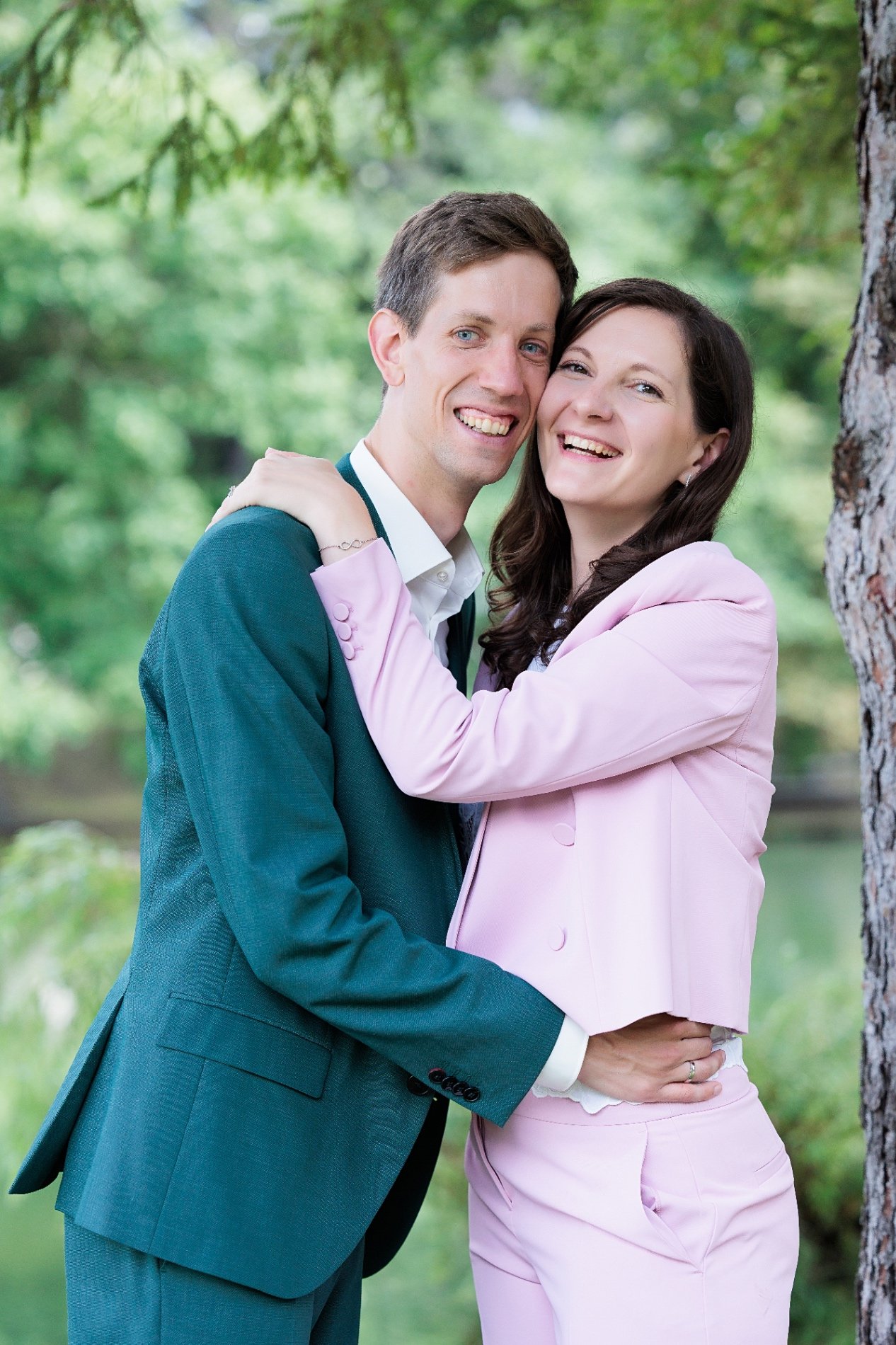
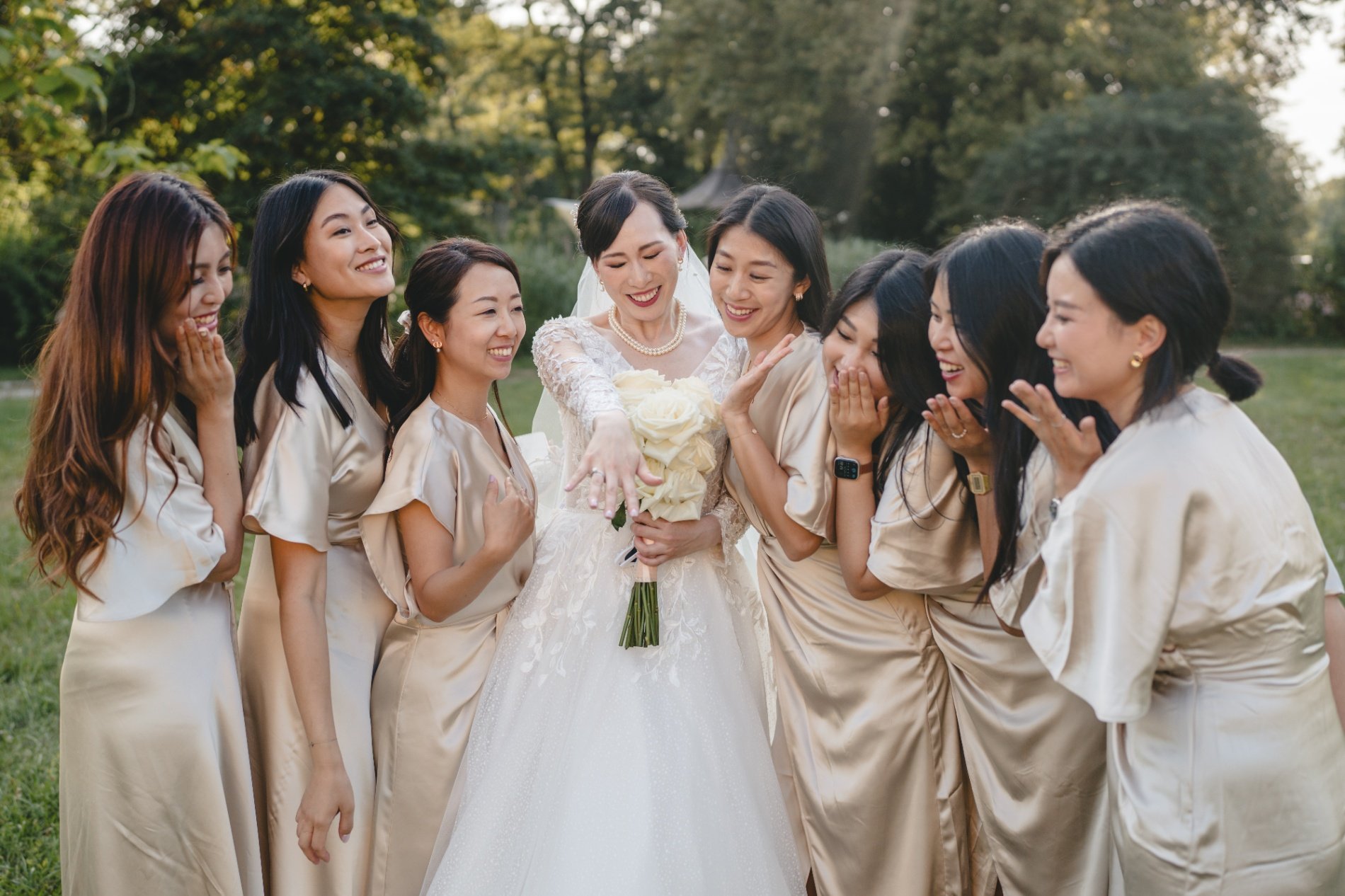
We are overjoyed with the photos from our wedding. Ian and Kiran not only have a fantastic eye for the special moments, they also bring a wonderfully relaxed and caring manner. Our guests were thrilled too! Thank you so much for the priceless memories and for your amazing dedication. We couldn't have wished for a better photographer ♥️
— Behiye O. on Ian P.
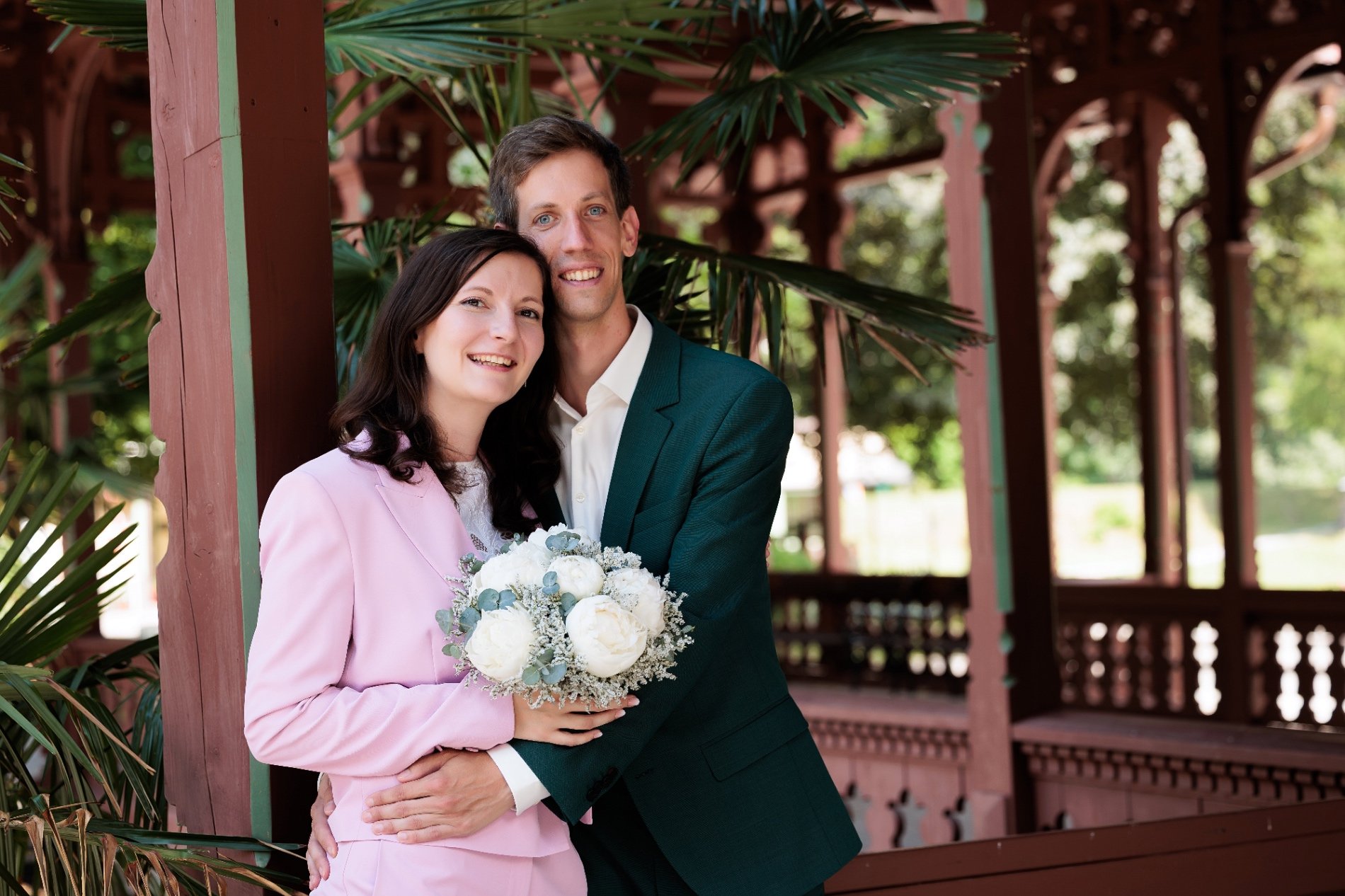
We're so happy we chose you! From the very first contact, everything was totally hassle-free and pleasant. Both at the pre-wedding shoot and on the wedding day we felt really comfortable with you, and everything was really relaxed and professional. The photos turned out really great and we're absolutely thrilled with the result! You captured the most beautiful moments of our day perfectly and gave us truly lovely memories. Thank you so much for your amazing work! We'd book you again any time and can't recommend you enough! ❤️
— Chelsea B. on Ian P.
Very professional, likeable and easy to work with. The photos turned out beautifully and capture our wedding day in a very special way. We're very happy and can definitely recommend him!
— Tony P. on Ian P.
Super friendly, creative, dedicated photographers! We clicked right away, they were really accommodating and delivered on time! Absolutely amazing photos that we always love looking at 😍
— Rechusmile on Ian P.
For our wedding, nothing mattered more to us than capturing the special moments and emotions forever. So naturally we had pretty high expectations of our photographers and videographers – and finding them was probably one of the biggest strokes of luck in our wedding. ❤️ On the day itself, we already felt incredibly comfortable with the two of them. They're super friendly, warm-hearted and at the same time absolutely professional. You can tell right away that they know 100% what they're doing, and they still manage to capture the moments completely naturally, without anything feeling posed. At first we even thought we didn't really need a video and were only looking for a photography team. Today we can say: we needed this video!!!🥹 The video truly exceeded our expectations. Watching it feels like living our wedding day all over again – with all the emotions, the voices and the little moments that we ourselves didn't even consciously take in on the day. And the photos turned out simply beautiful too, capturing our day exactly the way we want to remember it. We are incredibly grateful that the two of them were by our side at our wedding and captured these special memories for us. We would choose them again any time and recommend them with all our hearts. ❤️
— Marlene on Ian P.
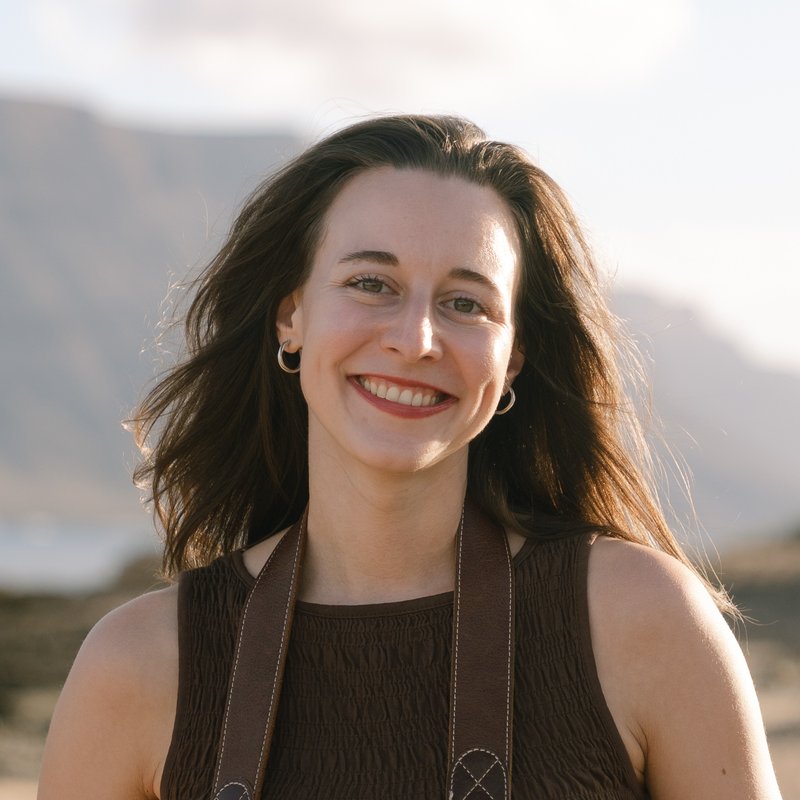
For our wedding this year, we were looking for someone to capture our special day exactly as we were – authentic, personal, and with all the little moments that made it so special. Since I consider myself a photographer, I had correspondingly high expectations for our wedding photos. Dani not only met them, but absolutely exceeded them. Thank you, Dani, for the incredibly smooth day, the wonderful preliminary discussions, and above all, for being so warm and genuinely interested in us from the very beginning. For everyone reading this: our highest recommendation! Book her, no matter the price; it's definitely worth it – it's the combination of genuine interest in people and photos with an eye for detail. This very mix is what makes her pictures so unique for us. Thank you for capturing our day exactly as we experienced it. We couldn't have wished for anyone better.
— Stefan W. on Dani H.
Schloss Eggenberg: fifteen minutes on tram 1
Hans Ulrich von Eggenberg began the palace in 1625 and had it built as a model of time: four corner towers for the seasons, 24 state rooms, 365 windows for the days of the year. It joined the old town's UNESCO listing in 2010, and tram 1 puts you at the gate in about fifteen minutes.
The park is the photograph, not the building. A long lime avenue leads to the front court, clipped beds lie behind the palace, and peacocks walk the lawns and roost in the trees from spring to autumn. Morning light comes across the front court and the avenue; late afternoon suits the garden side. The park is open daily and inexpensive; the state rooms are guided-tour only on a seasonal calendar, and the rules on tripods and larger set-ups are the estate's own and change, so check first. Keep your distance from the peacocks — they are used to people, not to being herded.
What the seasons do
Styria is the warm corner of Austria and the calendar shows it. Summer evenings run long and the terraces stay full late; the Schlossberg's beeches turn through October; and from around 20 November until Christmas Eve the Advent markets take Hauptplatz, Franziskanerplatz, Färberplatz and the Eisernes Tor, all a few minutes apart, with an Advent calendar projected onto the town hall front and a nativity carved in ice. Dates move every year, so check them. In deep winter the bare beeches open up the view from the parapet, and snow — usually Jänner, if it comes at all — is the rarest version of the roof picture.
A day out: the South Styrian Wine Road
Forty-five minutes south, the ridges of the South Styrian Wine Road run along the Slovenian border with vines falling away on both sides of the lane. October is the season: the vintage, mist in the valleys at dawn, yellow and copper on the slopes. The wooden Klapotetz windmills that clatter among the rows are traditionally put up at the end of July and taken down at the start of November, so they belong to late summer and autumn. Walk one ridge instead of driving between three — the lanes are single track with nowhere to pull over.
Planning a Graz photoshoot
Graz suits a short session better than most cities, because you are never more than ten minutes' walk from a completely different backdrop. Sixty minutes covers the Schlossberg terrace and a loop of the old town if you start at the top and come down; two hours adds either the river or Eggenberg, not both.
The city works for a solo portrait session as easily as for a couple, and it is one of the few places where rain is not a reason to move the date — the Landhaus courtyard, the Herrengasse arcades and the Murinsel all hold up in it. Express sessions start at €429 for sixty minutes, all-inclusive: tell us your dates and we will match you with a photographer who works Graz week in, week out, or browse the photographers and book online.
Want professional photos in Graz?
Browse portfolios, compare packages, and book a verified local photographer in minutes.