Family Ski Holiday Photoshoot: Zell am See, Kitzbühel, Schladming
A ski-holiday photoshoot is a logistics problem rather than a lighting problem. The mountain is already doing the work; what has to be solved is that the children are in ski school from ten until three, that the sun clears the ridge late and drops behind it early, and that everybody is wearing a helmet, goggles and a jacket that hides their face. Get the hour right and the frames come easily: a family in colour against white, a chairlift, a hut table, a sledge run at dusk. Get it wrong and you have photographs of four anonymous shapes. Here is how the week actually runs in three Austrian resorts that suit families, and where a photographer can stand in each.
The ski week has a timetable, and it is not yours
Austrian ski schools run to a shape that barely varies. Courses start on Sunday or Monday, group lessons occupy roughly 10:00 to 12:00 and 13:00 to 15:00 — some schools run straight through from 9:30 — and the week ends on Friday with a children's race and a prize-giving around midday. Times differ by resort and by age group, so check yours when you book. Plan around that shape and four windows open up.
Before ten. The lifts are running, the pistes are groomed and empty and the light is low and clean. It is the best hour of the day for a family on snow, and almost nobody uses it.
The lunch hour. Around twelve, when the classes break, everybody is together and hungry: hut tables, sun terraces, boots off, faces finally visible.
The Friday race. Bibs, a start gate, a finish line and real emotion. If your children are in a course this is the best hour of the week and it needs no arranging at all.
The last hour. From about three the valley floor is already in shadow while the summits are still lit; by four the light has gone. In late December and January, plan the closing frames for three, not four.
Zell am See: a lake at the bottom, a glacier at the top
Zell am See stands on a promontory in the Zeller See with the Schmittenhöhe above the town and the Kitzsteinhorn closing the valley beyond Kaprun. For a family that combination is unusually forgiving: you can photograph on snow at nearly two thousand metres and on a lake promenade at seven hundred and fifty within the same afternoon.
Several cable cars reach the Schmittenhöhe — the cityXpress from the edge of town, the areitXpress from Schüttdorf, the trassXpress from the Schmittental — and the ski school runs children's areas at the areitXpress valley station, in the Schmittental and at the mid-station above the town. Beginners stay within a few minutes of those bases, which means a photographer does not need to ski to reach them. The Mini Club for three- to five-year-olds runs Sunday to Thursday from ten to twelve in very small groups; check the current times when you book.
The summit is a broad dome with the small white Elisabethkapelle on it and something like thirty three-thousanders along the southern horizon, the Grossglockner among them. Cable cars stop for wind and take maintenance breaks between the seasons, so check the day's operation before building a session up there.
Below, the lake promenade and the Elisabethpark are the non-ski half of the trip: level, free and easy with anyone too small to ski. In a hard winter the lake freezes for skaters and a marked path across to Thumersbach — a photograph nothing else in Austria gives — but the ice is never a promise, so check its current state rather than assuming. Kaprun adds the family mountain Maiskogel, linked from the village centre by the MK Maiskogelbahn and onward to the Kitzsteinhorn glacier by the 3K K-onnection.
Kitzbühel: a painted town, two mountains, one week to avoid
Kitzbühel gives you something the purpose-built resorts cannot: a medieval town. The ochre, pink and green merchant houses of the Vorderstadt stand under two church towers on a pedestrian street, snow-lined and lit in the evening, and they will carry a whole family session on the day the mountain is a whiteout.
On snow, the Hahnenkammbahn leaves from the western edge of town and takes about eight minutes — the shortest route from a hotel breakfast to a ridge anywhere in Tyrol. The nursery area beside its valley station is the easiest place in this article for a photographer to work with small children: no distance, no lift, parents ten metres away. Practice lifts and carpets down in the villages are free to use, so a five-year-old's first two days cost nothing in lift passes. Across the town, the Kitzbüheler Horn has a family park and a short conveyor-served course that copies elements of the Streif, the Mausefalle included — a funny, genuinely good frame for an eight-year-old who has just watched the race on television.
Which brings up the week to avoid. The Hahnenkamm races fill the whole valley in the second half of January: the Streif is fenced, the centre becomes a grandstand and rooms are impossible. The date moves every year, so check it before booking anything.
Schladming: four mountains and a seven-kilometre sledge run
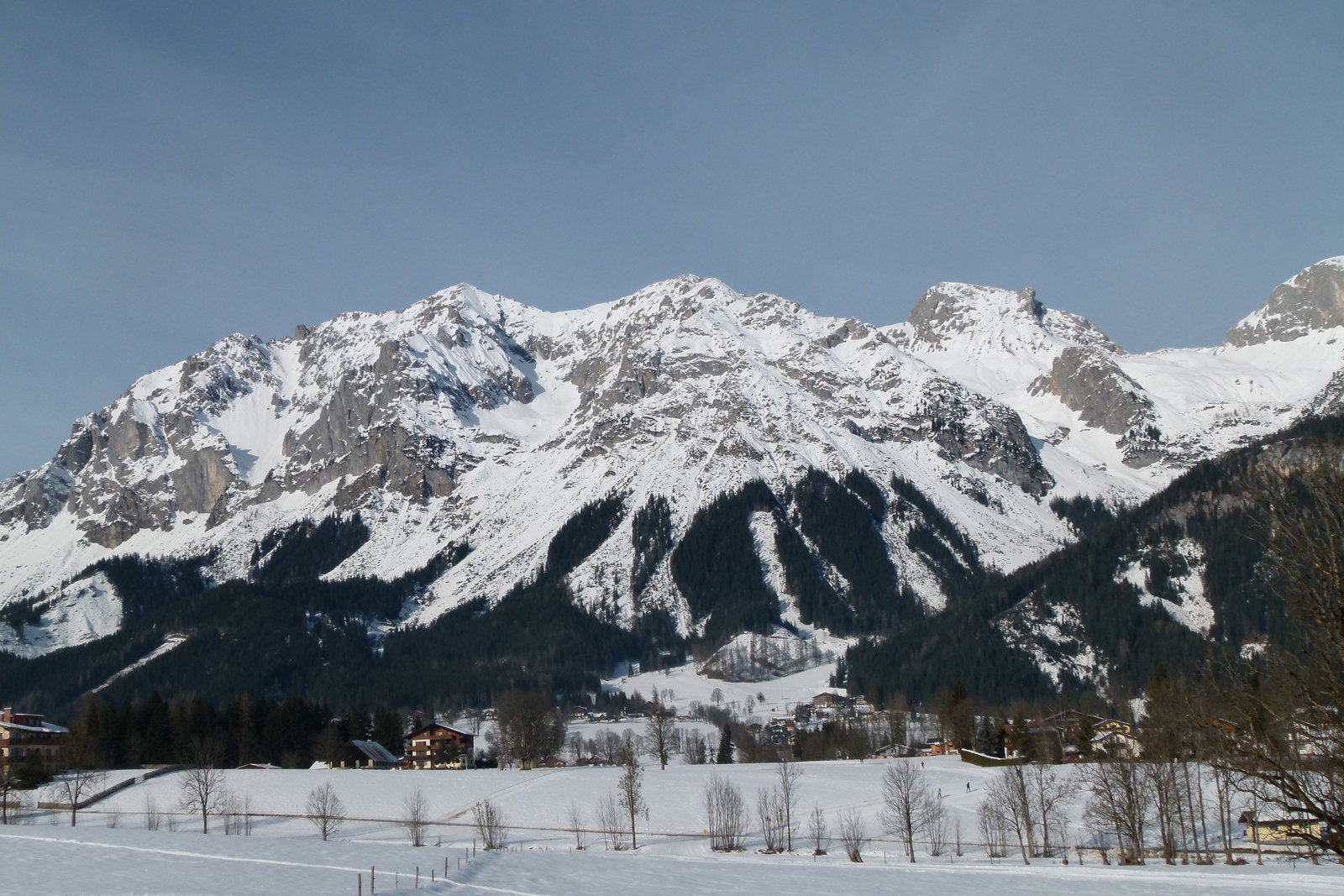
Schladming is a working town rather than a resort, and its gondola leaves from the middle of it — ten minutes from the main square to the Planai summit at 1,906 metres, with the Dachstein wall filling the northern sky. That is the easiest big frame here: no drive, no walk, and a broad summit where five minutes of walking loses the crowd.
The four connected mountains — Planai, Hochwurzen, Hauser Kaibling and Reiteralm — all have children's areas at or near their valley stations, which again keeps a photographer close to the beginners without a lift pass. And Schladming has one thing the other two do not match: the toboggan run on the Hochwurzen, seven kilometres and about 730 metres of descent from the top station down to Rohrmoos, floodlit on selected evenings with the gondola running into the night and toboggans for hire at the bottom. Head torches, breath, four people on two sledges — it is often the best family photograph of the week. It is also the most weather-dependent thing in this article, so check the conditions and the evening timetable.
The old square with its arcades and painted façades is the bad-weather answer, and from December the Advent market takes it over.
Goggles, helmets and staying recognisable
The practical problems of a ski shoot are all about faces. Helmets are compulsory for children under fifteen in Salzburg, Styria and most other provinces; Tyrol and Vorarlberg have no statutory rule, but ski schools enforce one anyway, so plan on helmets everywhere. Decide in advance that goggles go up on the helmet or down round the neck for the frames that matter — negotiating it on a cold ridge with a seven-year-old never works.
Colour does the rest. Snow swallows navy, black and grey; a red, mustard or teal jacket separates a child from the background at any distance, and a family in three different strong colours reads as a group rather than a smudge. Bring spare gloves, because wet hands end a session faster than cold ones do, and put a name on the helmet of anyone in a group class — it is how the instructor calls them, and how a photographer gets a face turned towards the lens.
Where a photographer can actually stand
On a piste the rules that apply to everyone apply to the camera: stop at the edge, never below a blind roll or a crest, and never where a class comes through at speed. A photographer who skis can follow a family down; one who does not will work from the top station, the nursery slope and the hut terrace, which is enough for most families. If you want pictures of a lesson, ask the ski school first — instructors are responsible for other people's children, and that consent is theirs to give rather than yours.
Cold is hard on equipment: batteries drain, and lenses fog when they come out of a warm hut into wind. That is the photographer's problem, not yours, but it is the reason sessions on snow are usually kept to an hour.
Planning a ski-holiday family photoshoot
Sixty minutes is the right length on snow. It is roughly how long small children stay cheerful in the cold, and it is enough for one mountain done properly; ninety works if the plan has a hut stop in the middle of it.
Book the window rather than the day — the hour before ski school, the lunch break, the Friday race or the last hour of light — and book early in the week, so that bad weather has somewhere to move to.
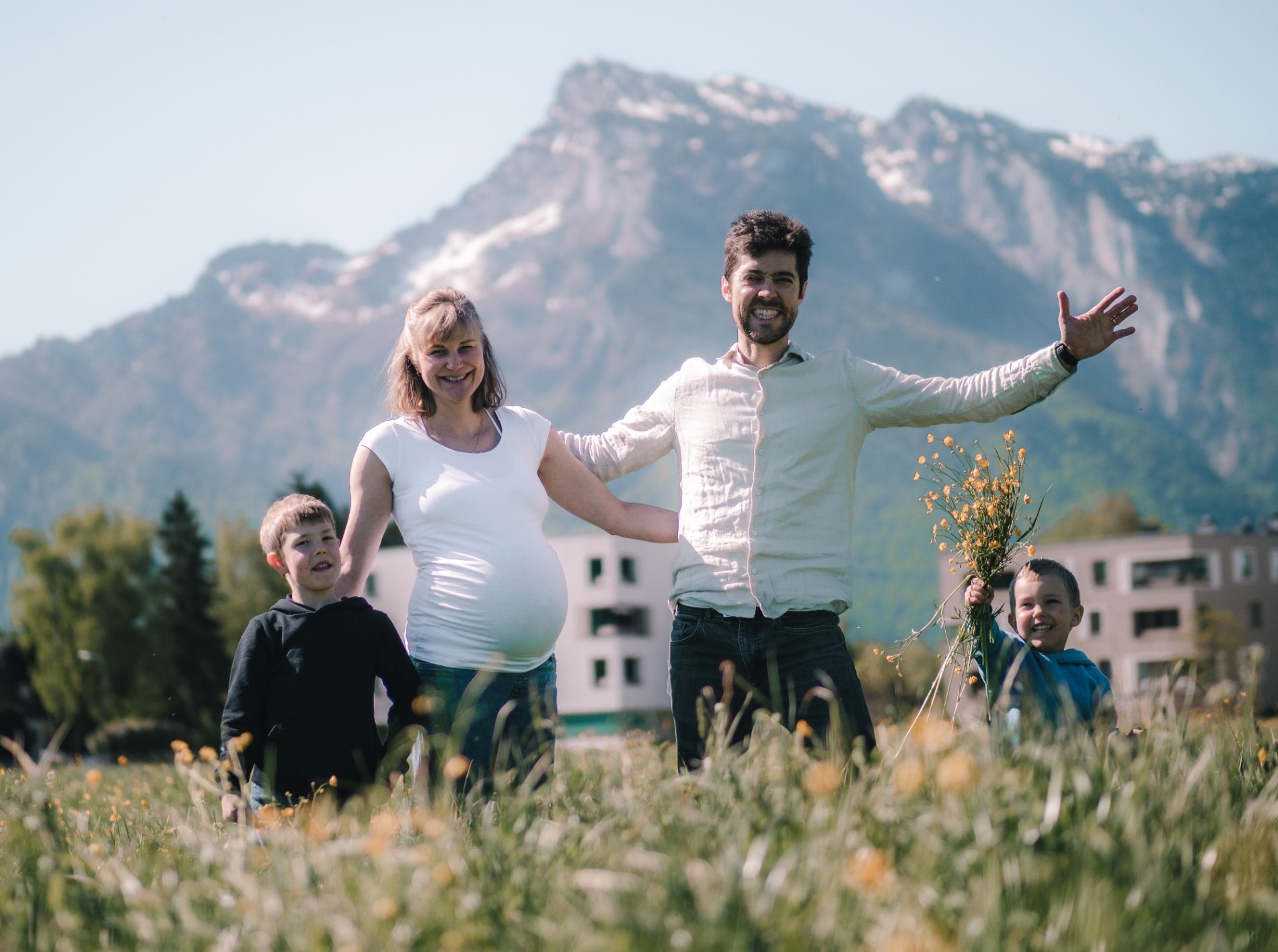
A local photographer will know which lift is running in wind, which terrace has sun at noon and where the class comes out of the trees. Family photoshoots work in all three resorts: Zell am See for the lake-and-glacier contrast, Kitzbühel for the painted town, Schladming for the sledge run. You can browse photographers and book online, with sessions from €429 all-inclusive for 60 minutes.
Want professional photos in Schladming?
Browse portfolios, compare packages, and book a verified local photographer in minutes.