Family Photoshoot in the Salzkammergut: lakes, meadows and short walks
The Salzkammergut is the easiest region in Austria to photograph a family in, and the reason is geography rather than scenery. Four lakes worth a session sit within an hour's drive of one another, every one of them has a level path along the water, and the frames that matter are minutes from a car park. Nobody has to climb anything. What goes wrong here is never the walking — it is the clock and the water. Hallstatt is effectively unusable between ten in the morning and four in the afternoon, the deep lakes are colder than children expect, and a five-year-old who has already sat through three drives will not perform on the fourth. Here is how the four destinations actually behave with children in tow.
Gmunden: the shortest walk to the biggest picture
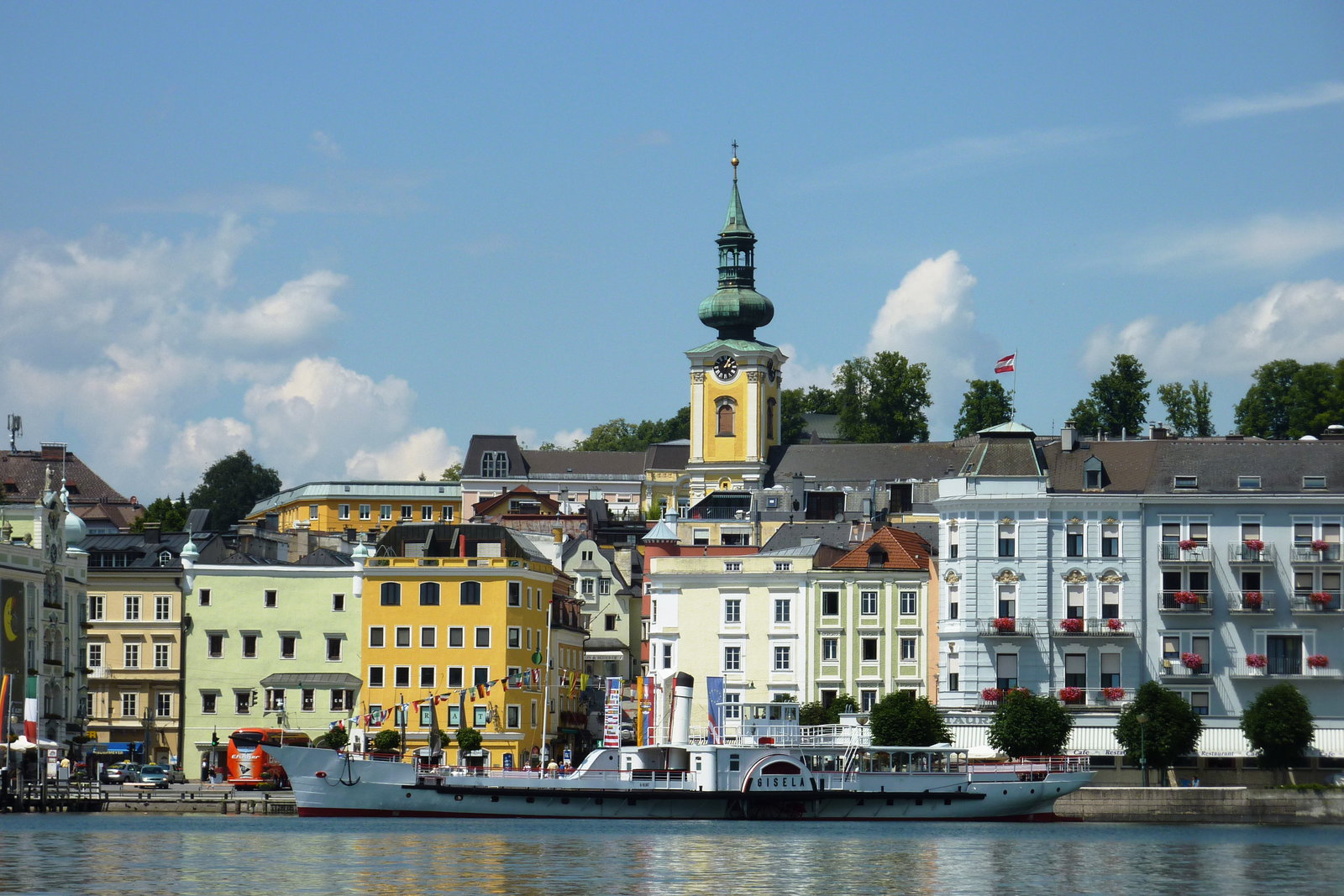
Gmunden holds the north end of the Traunsee, and the Traunstein rises 1,691 metres straight out of the far shore — so every frame here has a mountain in it before anyone stands up. The Esplanade runs south from the Rathausplatz along the water to the Ort peninsula: twenty minutes at adult pace, level the whole way, and genuinely easy with a pram. Halfway along, the Toscanapark opens off the promenade with old trees and lawns running down to the lake, and the tree cover keeps the light soft exactly when the open shore is at its harshest. Use the park in the middle of the day and the promenade early or late — the two are five minutes apart and are never good at the same hour.
At the southern end the Seeschloss Ort stands on its own rock island, with a plank footbridge running out to the gate. Shot head-on from the shore end, the boards converge on the arched doorway and the onion-domed tower rises straight above it. Children walk it unaided, which is the whole reason it works with a family. The castle is a working venue — weddings, concerts, a registry office — so parts of it close at short notice and the estate sets its own rules on tripods and anything that looks like a production. Check what is open before the day.
Two small things buy a lot of goodwill: the town hall's carillon on the Rathausplatz, cast in Gmunden ceramic and played at set times through the day, and the tram, running since 1894 and climbing out of town at up to ten per cent. The Grünberg cable car on the eastern side is barrier-free and runs roughly from late March to mid-November with no winter service; hours change every season, so check them.
Swimming is the one thing the Traunsee is not built for. It is the deepest lake in Austria and summer water sits around 18 °C, reaching perhaps 21 °C in August — fine for a nine-year-old, cold for a toddler.
St. Wolfgang: a boat does the babysitting
On the Wolfgangsee the water does the entertaining, and it is much warmer: this lake reaches around 24 °C in high summer. The ferries run roughly from May to late October, and a crossing from St. Gilgen or Strobl hands you the frame the village is famous for — white church tower, painted hotel fronts, the green Falkenstein slope behind — from a moving deck, with nobody asking a four-year-old to pose. Timetables are seasonal and the last sailing back is earlier than most people expect, so check before building a session around a boat.
On land, the terrace beside the pilgrimage church is free, open and where most sessions start; the arcaded lane next to it is cobbled and shaded all day, which is the answer when the lakefront is too bright. The pier by the Weisses Rössl puts you a few metres out over the water with the hotel front on one side and the church tower behind — the whole village in one frame. The promenade and the pier are public; the hotel terrace is not, so ask first.
The Schafbergbahn is the big day out and the one to think hardest about. The cog railway has run since 1893, climbs 1,190 metres in about 35 minutes and operates roughly from late spring to the start of November. Take the first train: clear air, soft light, and a summit that may be yours for twenty minutes. It is cold and windy up there even in July, the ridge drops away on its northern side, and small children need a hand the whole time. Under five, the lakefront is the session and the railway is the afternoon that follows.
Hallstatt with children: seven o'clock or not at all
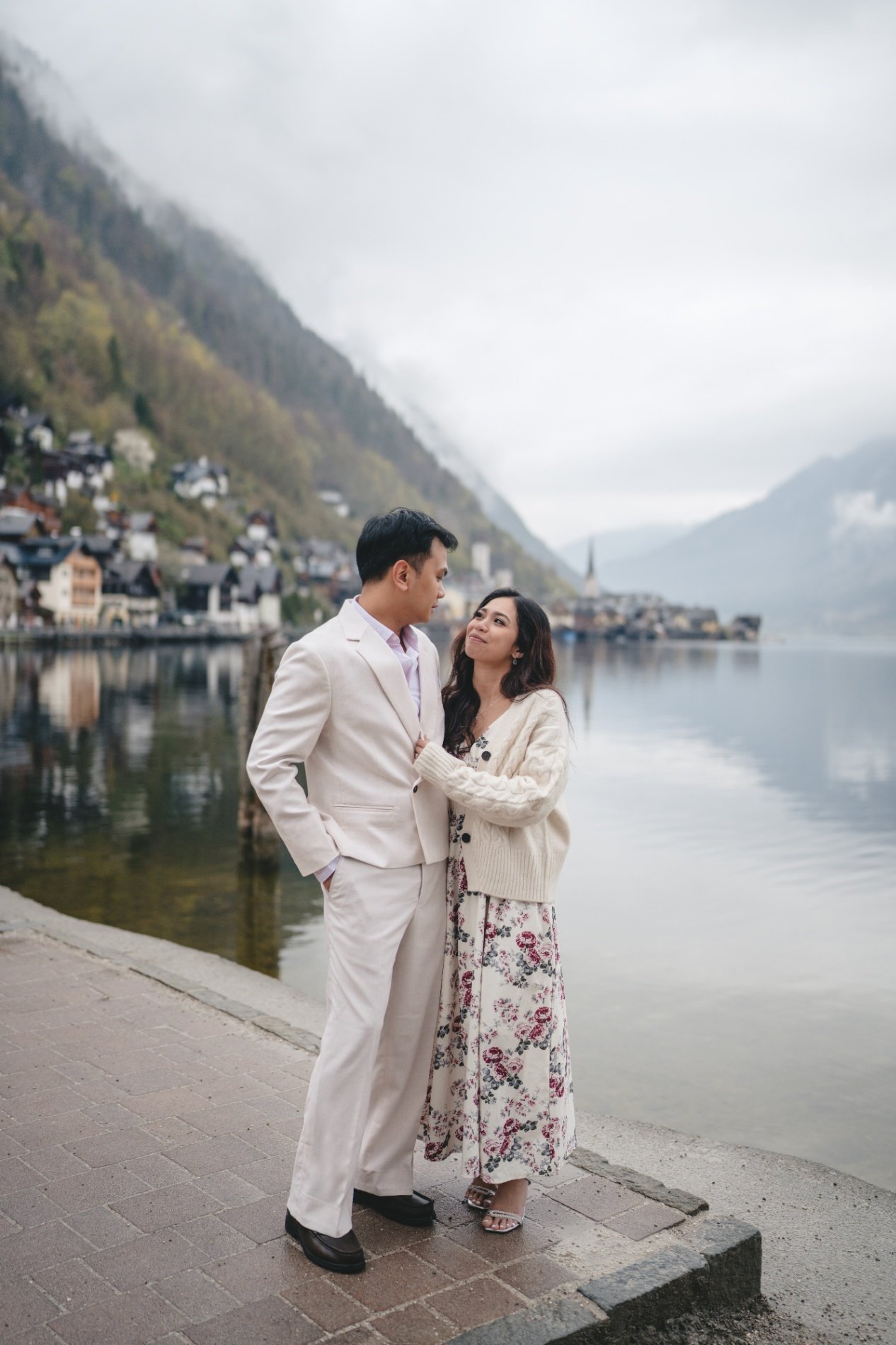
Hallstatt works with a family only if you accept its timetable. The classic viewpoint on Gosaumühlstraße is a few metres of railing on a narrow public road with buses and delivery vans on it. At dawn it is yours; by ten the coaches have arrived, and it stays three deep in phones until about four. That is not a place to be holding a toddler's hand.
The version that does work is at water level and needs no climb at all. The boat landing beside the Marktplatz, the timber Seehütten standing on stilts either side of it, and the level stretch of the Seestraße between them give you the village, the lake and the Dachstein without a single step. The ferry across to the railway station has run since 1881 and is the only boat service on an Austrian lake that keeps going through the winter; ten minutes on the water does more for a restless six-year-old than any amount of coaxing. Time the frame between arrivals — the pier fills each time a boat lands and empties two minutes later.
There is a bathing island on the shore with a children's area for the hour afterwards, and the centre is closed to visitors' cars — park above the village and walk in.
What clients say about this kind of shoot
Dreamy wedding photos and incredible speed! We couldn't have wished for a better photographer for our special day than Jessica! Even getting to know her in person before the wedding completely convinced us, and we weren't disappointed. She has a wonderful, pleasant manner, so we felt great in front of the camera from the first second. The pictures turned out simply beautiful and capture the emotions of the day perfectly. Another absolute highlight was the speed: we got our finished photos and the highlight video incredibly fast! Dear Jessica, a thousand thanks for these unforgettable memories. We recommend you with all our hearts!
— Bianca B. on Jessica L.
Laura is an outstanding and highly professional photographer—and also an incredibly wonderful person! The photoshoot with her went absolutely smoothly from start to finish. She had already scouted out the most beautiful photo spots beforehand and planned the sequence of locations so perfectly that everything ran smoothly and without any complications. You can immediately tell how much passion she puts into her work and how much she loves photography. She is dedicated, attentive, and her friendly manner makes you feel completely at ease in front of the camera. Thank you so much for everything, Laura! I wholeheartedly recommend her!
— Lütfiye C. on Laura P.
I cannot recommend Laura enough for wedding photography! She really knows how to make you comfortable in front of the camera and captures the best moments!
— Ana P. on Laura P.
That was the best experience ever! She caught our beautiful moments and kept them in photographs so now they will stay with us forever! Thank you so much! I would truly recommend her to every couple looking for an amazing photographer! So many fresh, one-of-a-kind ideas, thinking outside the box to make our special day unforgettable!
— Natalia Z. on Laura P.
Fantastic photographer. We booked her for our wedding. Everything was perfect. Super friendly and very professional. Highly recommended.
— Johannes E. on Laura P.
Laura is a friendly photographer who creates an atmosphere where you immediately feel comfortable. She is authentic, creative, and has an eye for special moments, which is clearly visible in her pictures!
— Angelina B. on Laura P.
Gosau: an alpine view you can reach with a pram
The Vorderer Gosausee is the one big alpine picture in this region that asks for no walking at all. The car park is at the northern end and the frame — the Dachstein, its glacier and the grey teeth of the Gosaukamm, all standing a second time in the water — is a minute away. The circuit around the lake is roughly four and a half to five kilometres of wide, almost flat gravel, about an hour at walking pace, and it takes a pram the whole way round.
The reflection is a morning thing. The valley wind gets up late in the morning and breaks the surface; by afternoon you still have the mountain but not its double. The lake also sits in shade until the sun clears the Gosaukamm, so the light arrives late, low and warm rather than from overhead, which is unusually kind to children's faces. Parking is paid and the car park fills by mid-morning in July and August. The road up is ploughed in winter, but check conditions and whether the upper car park is open.
Heat, shade and the middle of the day
Salzkammergut summers are not Mediterranean, but between about eleven and four the open lakefronts are bright, hard and unflattering — and that is exactly when everybody else is on them. Build the day around two windows: the two hours after breakfast and the two before dinner. In between, use tree cover — the Toscanapark, the arcaded lane in St. Wolfgang, the alleys off Hallstatt's Marktplatz — or go swimming and come back.
Rain is the region's other constant, and it is not the disaster it looks like. Overcast light suits pastel façades, wet cobbles reflect, and mist lifting off these lakes is the version of the Salzkammergut that photographs best. Pack a full change of clothes per child, plain colours rather than patterns, and shoes that are allowed to get wet.
Ages: what actually works
Under three: one location, sixty minutes, and something to do — a pier, a boat, ducks, a bridge whose boards rattle. There is no second spot.
Three to six: movement beats posing every time. Running the length of a jetty, throwing stones into the Traunsee, waiting for the carillon. Ninety minutes is the ceiling.
Seven to twelve: the age that will walk the Gosausee circuit or ride the Schafbergbahn and enjoy both, and the age at which a mountain in the background starts to mean something.
Teenagers: give them the boat, the cable car and a say in where you go, then photograph the arrival rather than the pose.
Planning a Salzkammergut family photoshoot
Pick one lake per session. The temptation is to string Gmunden, Hallstatt and the Gosausee into a single afternoon; with children that produces three car parks and no pictures. Sixty minutes is right for a family with a toddler, ninety for school-age children.
Book the hour rather than the day. Early morning is empty everywhere in this region, evening light runs long from May to September, and in winter the blue hour arrives around half past four with the villages quieter than at any other time of year.
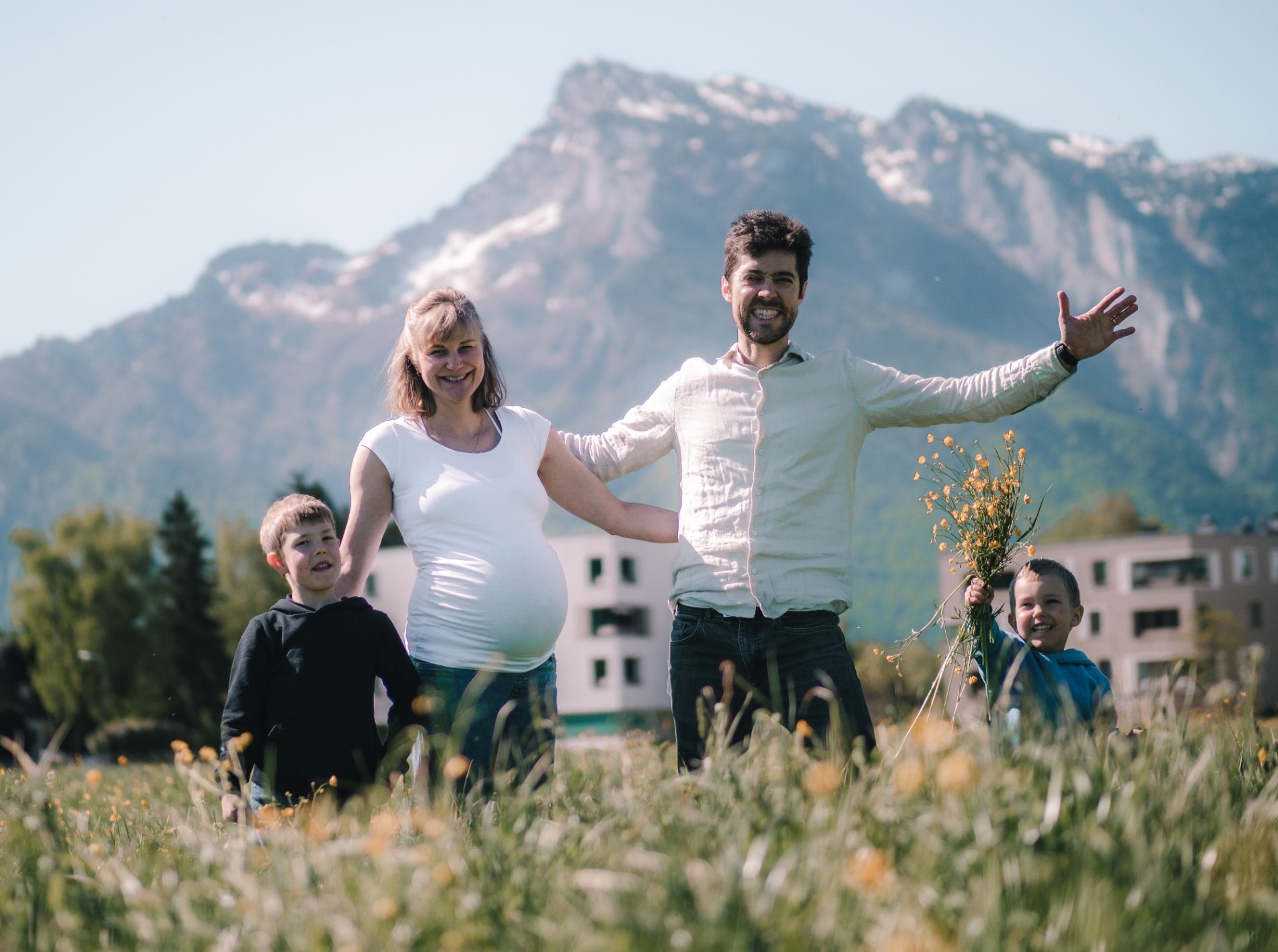
Family photoshoots here are usually built around a single destination: Gmunden and St. Wolfgang for the easy lakeside hour, Hallstatt at dawn, Gosau when you want the mountain. A local photographer will know which shore is in shade at five and which car park has already filled — you can browse photographers and book online, with sessions from €429 all-inclusive for 60 minutes.
Want professional photos in Hallstatt?
Browse portfolios, compare packages, and book a verified local photographer in minutes.