Grossglockner High Alpine Road photographers, ready to book
Salzburg
Wedding Photographer in Grossglockner High Alpine Road
The Grossglockner road dresses a wedding in glacier and altitude — the Edelweißspitze at 2,571 metres, the chapel on the Fuscher Törl saddle, and Heiligenblut's spire with the peak behind it. The road is open only from roughly May to October.
Wedding Photographer on the Grossglockner High Alpine Road
The Grossglockner road dresses a wedding in glacier and altitude — the Edelweißspitze at 2,571 metres, the chapel on the Fuscher Törl saddle, and Heiligenblut's spire with the peak behind it. The road is open only from roughly May to October.
About Grossglockner High Alpine Road
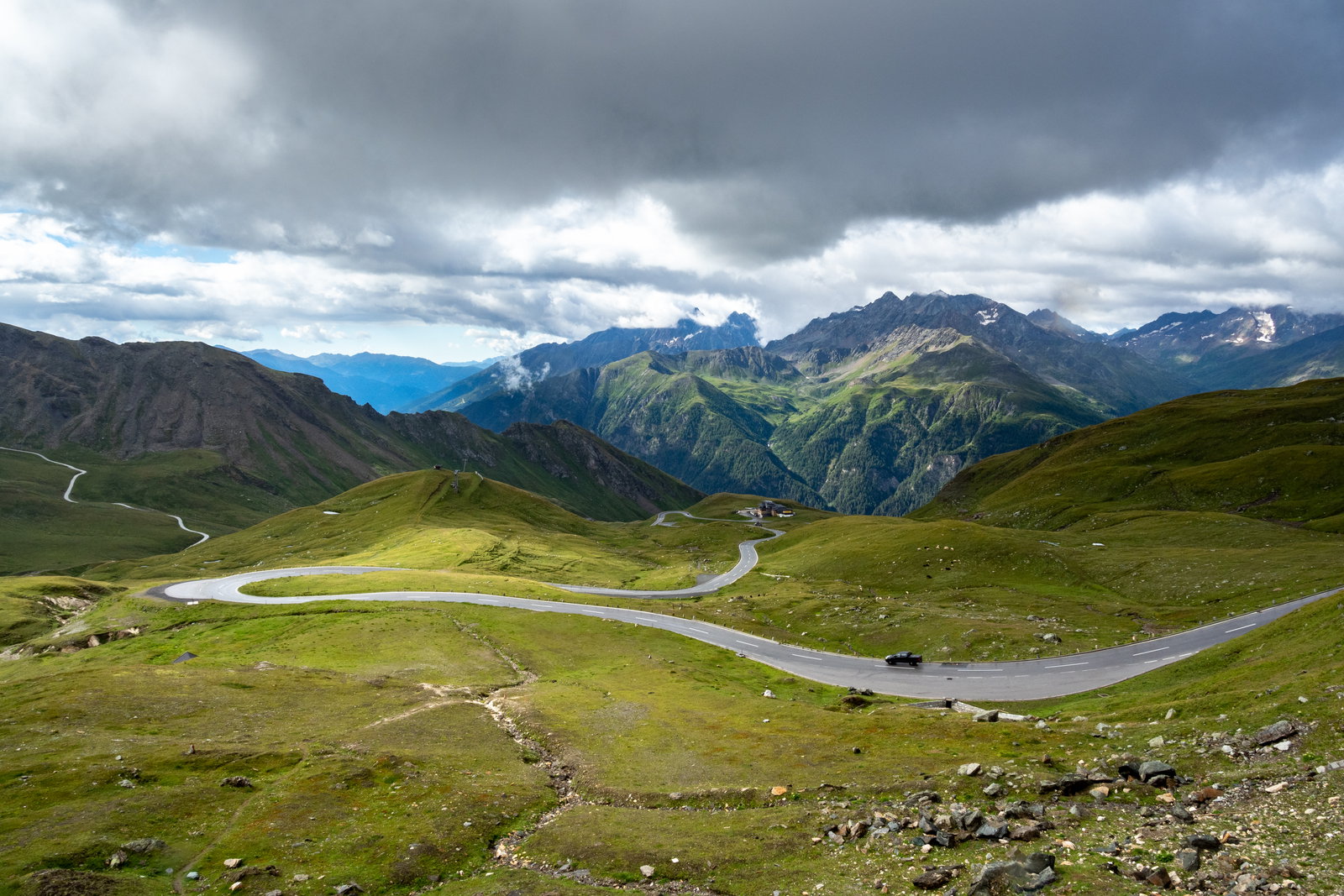
The Großglockner Hochalpenstraße runs from Bruck in Salzburg over the Hochtor pass to Heiligenblut in Carinthia: 48 kilometres, 36 hairpins and a high point above 2,500 metres, built in the 1930s purely so that people could look at the mountains. It is a toll road and it is seasonal — it opens around the start of May and closes with the first serious snow, usually in late October or early November, and the gates also have daily opening hours. Nothing here is reachable in winter, so check the current opening and toll before planning anything. The end of the branch road on the Carinthian side is the Kaiser-Franz-Josefs-Höhe at 2,369 metres, and it looks straight up the Pasterze, Austria's longest glacier, to the Großglockner itself at 3,798 metres. The terrace is level, the car park is enormous and by eleven on an August day it is full; the first two hours after the gates open are the ones worth having. Halfway along, the Fuscher Törl carries a small memorial chapel on a saddle with drops on both sides, and a side road climbs from it to the Edelweißspitze at 2,571 metres — the highest point you can drive to and a 360-degree view of thirty peaks. Below, on the Carinthian side, Heiligenblut's Gothic pilgrimage church stands on a rise with the Großglockner directly behind its spire — the single most published frame in the region, and the only one that also works in winter, when the village is open even though the pass above it is shut. Summer up here is short: snow patches into July, alpine flowers in late June, marmots on the meadows and afternoon thunderstorms that build fast. Bring a layer — it is often ten degrees colder at the top than in the valley.
The whole region
💒Wedding Photographer in SalzburgOther photoshoots on the Grossglockner High Alpine Road
Four Steps to Stunning Photos
From booking to delivery — we make professional photography effortless
Choose Your Path
Browse photographer profiles yourself and pick your favorite — or tell us your preferences and let our team hand-pick the perfect match for you.
Self-service or concierge — your choice
Book Instantly
Pick your date, choose a package, and book your session in minutes. Chat with your photographer to plan the details.
Secure payment with Apple Pay & Google Pay
Enjoy Your Shoot
Meet your photographer at the perfect location. Relax, be yourself, and let them capture your best moments.
Average session: 1-2 hours
Get Your Photos
Receive professionally edited photos in a private, password-protected gallery. View online, download individually, or grab the full ZIP.
Secure gallery with password protection
Your Money is Protected
Powered byWhen you book a session, your payment is securely held by Stripe — not charged to the photographer. The money is only released after you receive your edited photos and confirm you're happy with them. If something goes wrong, you can open a dispute and get a full refund. Zero risk.
Top Photo Spots on the Grossglockner High Alpine Road
The most photogenic locations for your Grossglockner High Alpine Road photoshoot
Heiligenblut church below the peak
A Gothic pilgrimage church on a rise at the Carinthian end of the road, with its tall spire and the Grossglockner lined up directly behind it.
Best time: The last hour of light on the peak; winter mornings after snow, when the pass above is closed
Walk the meadow north of the village until the spire sits under the summit — the alignment only holds from a narrow arc. The village is reachable all year from the Carinthian side even when the pass road above is shut.
Kaiser-Franz-Josefs-Höhe and the Pasterze glacier
A level terrace at 2,369 metres at the end of the Carinthian branch road, looking straight up Austria's longest glacier to the 3,798-metre summit of the Grossglockner.
Best time: The first two hours after the toll gates open, roughly May to October; unreachable in winter
The whole frame is within fifty metres of the car park, so this works even with no walking. Check the current opening dates, daily hours and toll before you drive up — all three change every year.
The Edelweißspitze
The highest point on the whole road at 2,571 metres, reached by a short cobbled spur — a stone tower on a bare summit with thirty peaks around it.
Best time: First or last light for soft light on bare rock; avoid midday, when the summit is flat and glaring
It is a summit, not a viewpoint terrace — expect wind, cold and little room, and hold on to anything light. The spur is cobbled with tight hairpins and closes earlier than the main road, so check restrictions and conditions.
The Fuscher Törl
A saddle at 2,428 metres with the ground falling away on both sides and a small memorial chapel on the ridge — the most exposed stop on the Salzburg half of the road.
Best time: Morning for clear air and side light on the chapel; any time cloud is breaking after weather
This is the windiest and coldest stop on the road — dress for it and secure anything loose. Pair it with the Edelweißspitze, which branches off here, rather than treating them as two separate drives.
Frequently asked questions
How far in advance should we book a wedding photographer in Austria?
For peak dates — Saturdays from May to September, and September weekends in the wine regions — book six to twelve months ahead. The best-reviewed photographers usually sell out right after the venue does. Weekdays and the shoulder months are far more flexible, and three to four months is normally comfortable. A winter wedding in the mountains is its own calendar: the weeks around Christmas and New Year go early, February is easier. If your date is closer than that, do not assume it is hopeless — Photo Austria can check the entire vetted roster for one date at once. When comparing, ask to see a full wedding gallery rather than portfolio highlights; how someone handles a dim baroque church tells you more than their best ten frames.
How many hours of coverage do we need?
Work backwards from the moments you cannot lose. An intimate ceremony with dinner fits into four or five hours: preparations, vows, couple portraits at golden hour, the first speeches. A classic full day, from getting ready to the first dances, runs eight to ten. Two Austrian specifics matter here. In June the sun sets around nine in the evening, so couple portraits belong in that late window rather than straight after the ceremony. And the traditional late programme — the midnight snack, the stealing of the bride, the dancing that keeps going — happens long after many contracts end, so decide in advance whether you want it covered or are at peace with a set finishing time. Your photographer will recommend honest hours, not maximum hours.
Do photographers travel to any venue in Austria?
Yes, and they are used to it, because so many Austrian weddings happen an hour or two from the nearest city. Photographers are based in Vienna, Salzburg, Innsbruck, Graz and Linz and drive out to the Salzkammergut, the wine regions and the alpine valleys routinely; others live in those regions themselves. For remote venues, travel and accommodation are quoted transparently up front — for a Saturday wedding at a hut above Schladming or a lake hotel deep in the Salzkammergut, expect the photographer to arrive the evening before rather than gamble on a pass in bad weather, and that night appears in the quote. Mention the venue in your first message to Photo Austria and we will prioritise photographers already near it.
How much does a photoshoot on the Grossglockner High Alpine Road cost?
Professional photoshoots on the Grossglockner road start from €310. Packages vary by duration and the number of edited photos — an hour at one viewpoint, or two hours to link the Fuscher Törl, the Edelweißspitze and the Kaiser-Franz-Josefs-Höhe. The road toll and the driving time between stops are separate from the session, so most couples book the two-hour option here.
What are the best photo spots on the Grossglockner High Alpine Road?
The Kaiser-Franz-Josefs-Höhe on the Carinthian side looks straight up the Pasterze glacier to the Grossglockner and is the big one. The Fuscher Törl carries a small memorial chapel on a saddle with drops either side, and the side road above it reaches the Edelweißspitze, the highest point you can drive to. Lower down, Heiligenblut's church stands with the peak behind its spire.
What is the best time of day and season for photos on the Grossglockner road?
Go up early. The first two hours after the toll gates open give clear air, empty terraces and the glacier in side light; by eleven in August the Kaiser-Franz-Josefs-Höhe car park is full and cloud often builds on the peak. Late June to early September is the reliable window, with alpine flowers in July; in October the light is best and the closing date unpredictable.
Ready to book your wedding photographer on the Grossglockner High Alpine Road?
Browse verified photographers and book in minutes — no commitment, money-back guarantee.